
Claim a Free Sample
Get a preview with key statistics, projections, and trends for this report. Ideal for quick insights.
Send Me a SampleNeed full access?
Purchase ReportHousehold Kitchen Appliances Market Trends
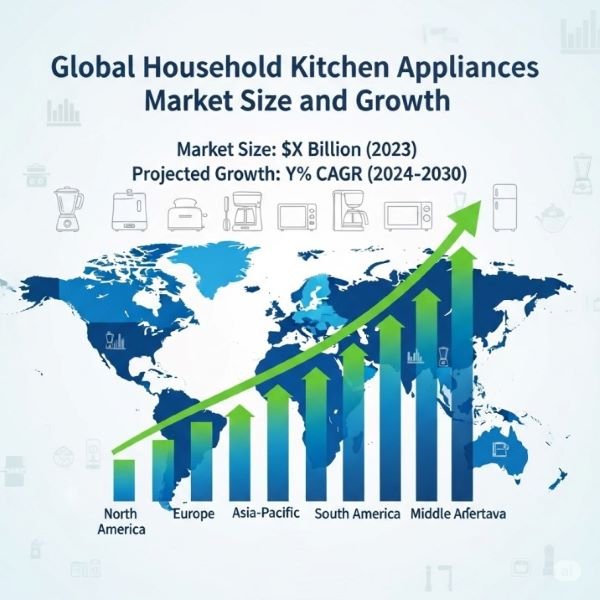
The size of the global household kitchen appliances market was valued at USD 269.27 billion in 2024 and is projected to expand at a 4.2% CAGR between 2025 and 2035. The sector is seeing notable growth, as rising disposable incomes, urbanization, a preference for convenience, and evolving technology drive growth. These factors combined with increased home renovation activities, consumer behavior, and increased consciousness towards energy efficiency are boosting demand and market growth for home appliances globally.Size, byProduct, 2024 - 2030{USD Billion} Household kitchen appliances market size is projected to expand at a 4.2% CAGR between 2025 and 2035. request a free sample copy
Household Kitchen Appliances Market Size, Share & Trends Analysis Report By Product (Refrigerator, Dishwasher, Cooking Appliances), By Technology (Conventional, Smart Appliances), By Region (North America, Europe), And Segment Forecasts
As per a 2022 article by Nilseniq, close to 49% of customers look at energy efficiency as a high priority when buying major domestic appliances (MDAs), including household kitchen appliances. Home remodeling and renovation boom, especially kitchen renovations, has greatly accelerated the market. With more and more homeowners spending money on home improvements due to increased home values and low unemployment levels, sales of new, efficient, and visually appealing household kitchen appliances have skyrocketed.
Customers look for integrated, embedded smart appliances, like ovens, dishwashers, and cooktops that fit modern open-concept kitchen designs. Between mid-2014 and 2024, increasing home values and equity have spurred investments in home remodeling, further driving demand for smart kitchen solutions. U.S. homeowners in the United States increased home equity by an average of USD 9,800 as of Q2 2020, and 51% of them indicated they finished large renovations in the last two years, with the average empty nester spending USD 8,670. Additionally, in a 2023 report from HomeAdvisor, 52% of Americans channeled their spending into home improvement, the most wanted being kitchen remodels-27% of those questioned would have a kitchen remodel on their wish list with a USD 10,000 budget.
The surge in technology is redesigning kitchen appliance and storage design, led by younger Generation Y and Z buyers looking for intelligent, cutting-edge home solutions. With increased smart home integration, including Amazon Alexa and Google Home, and IoT-enabled products like smart fridges, the need for technologically sophisticated home kitchen appliances is on the rise. In 2023, according to a Beko study, 61% of American consumers value quality and durability, while more than half are interested in energy-efficient, innovative products. Convenience features such as precision cooking, multifunctionality, and smartphone app remote control are improving convenience, while energy-saving appliances are winning over environmentally friendly consumers. These trends, spurred by smart homes, contemporary designs, and sustainability, are driving the market, with manufacturers racing to deliver high-quality, efficient products.
Changing lifestyles of consumers, prompted by hectic lifestyles, urban lifestyles, and home-based living, are also fueling market growth. Customers more and more call for clever, time-saving, and energy-saving appliances such as AI refrigerators, smart coffee makers, and multi-purposed ovens. Based on the National Frozen and Refrigerated Foods Association, consumption of home-cooked meals has seen a boom, with 81% of Americans preparing over half of their meals at home in order to save money and manage their budgets. According to Goodfood's "Change of Taste Survey," 78% of Canadians like home cooking, and more individuals cook breakfast and lunch since the pandemic. Small kitchen household appliances such as air fryers and electric pressure cookers are becoming increasingly popular for instant, space-efficient, and healthier alternatives.
Report Coverage & Deliverables
- Competitive benchmarking
- Historical data & forecasts
- Company revenue shares
- Regional opportunities
- Latest trends & dynamics
Consumer Insights
Consumers worldwide are looking for convenience, efficiency, and versatility in the kitchen, fueling the popularity of the small domestic appliances market. As consumers have busier lives, they value appliances that save time and effort. In the fast-paced lifestyles of the present times, individuals always look for ways to make their daily lives simpler and save time. Having a kitchen appliance in the home provides consumers with the convenience of preparing their food and drinks quickly and easily without going to restaurants outside.
Besides the ongoing popularity of hybrid schedules and work-from-home options, customers in developed nations are increasingly choosing to "skip the wait" and cook at home.
Also, small and versatile appliances like air fryers, slow cookers, and instant pots have become staples in homes. These appliances allow consumers to cook quickly and conveniently, meeting their busy lifestyles. Health-conscious consumers are also driving the market, showing a strong demand for healthy cooking appliances like air fryers, blenders, juicers, and yogurt makers. Consumers are looking for appliances that enable them to add fresh, healthy ingredients to their diets. The increased home cooking activities have driven the demand for small cooking appliances in homes throughout the forecast period.
Association of Home Appliance Manufacturers (AHAM's) consumer study, completed in October 2021 among more than 4,000 U.S. households, found that home cooking was the most frequently mentioned activity that consumers believed would continue post-pandemic. Additionally, over 30% of those surveyed said they purchased small appliances in 2021.
Production Data
Worldwide, the Asia-Pacific area dominates the manufacturing of major appliances due to its cost competitiveness, robust supply base, and existence of industry behemoths such as Haier Group Corporation, Midea Group Co., Ltd., Samsung Electronics Co., Ltd., and LG Electronics Inc.
China leads the world in appliance manufacturing in Asia Pacific, followed by factory locations South Korea, India, Vietnam, and Thailand. South Korea is especially famous for technologically advanced appliances, led by LG Electronics Inc. and Samsung Electronics Co., Ltd., while India and Vietnam are becoming cost-efficient manufacturing locations.
Production levels differ among appliance product types. Refrigerators lead in yearly production, driven by increasing demand for energy-efficient and intelligent cooling products from companies like Haier Group Corporation, LG Electronics Inc., Samsung Electronics Co., Ltd., Whirlpool Corporation, and Robert Bosch GmbH. Washing machines are second, with advancements in AI-enabled and front-load models making them more attractive. The key manufacturers of air conditioners are Gree Electric Appliances Inc. of Zhuhai, Daikin Industries, Ltd., Midea Group Co., Ltd., and Panasonic Corporation, which specialize in inverter technology and environmentally friendly refrigerants.
Technology Insights
Traditional home kitchen appliances held a revenue market share of 91.54% in 2024 due to their reliability, cost-effectiveness, and simplicity. Gas stoves, electric ovens, and simple blenders are popular due to their simplicity of use and durability. Users like them because they are dependable, easy to maintain, and less expensive than more sophisticated, technology-based products. The demand for traditional appliances remains high as a result of their durability and simplicity, and hence the suitability of these appliances for individuals looking for effective and affordable kitchen appliances.
For example, in February of 2024, CAFÉ unveiled a new dishwasher option with the arrival of the CAFÉ Single Drawer Dishwasher. The appliance is intended to be installed at counter level so that users don't have to bend over to load and unload dishes. It is perfect for those who want ease and convenience without sacrificing a stylish look.
The market for smart appliances in residential kitchen appliances is expected to develop at a CAGR of 5.8% during the period 2025-2035, led by the upsurge in the demand for convenience and time-saving appliances. With hectic lifestyles, customers opt for Wi-Fi-equipped ovens, fridges, and coffee machines with remote control, notification, and voice control. These operations through smartphone apps eliminate tasks such as preheating ovens, monitoring fridge stock, or making coffee, making meal preparation more efficient.
In April 2024, Samsung introduced its Bespoke AI Household Kitchen Appliances with smart refrigerators, ovens, and more. These appliances employ artificial intelligence to provide tailored suggestions based on user preferences and dietary requirements. With mobile app connectivity, they facilitate easy grocery list management, meal preparation, and cooking, making kitchen operations easier and healthy eating habits possible.
Product Insights
The cooking appliances generated a revenue share of 42.85% in 2024, driven by evolving consumer lifestyles and an increased emphasis on home cooking. With people spending longer periods at home as a result of work-from-home trends and a change in eating habits, there is a higher level of aspiration to invest in cooking appliances that help in preparing meals more efficiently and effectively. The increase in food culture, whereby individuals try new foods and embrace healthier cooking methods, also drives the demand for different kitchen appliances like air fryers and blenders. Consumers seek innovative, easy-to-use appliances that provide versatility, quickness, and convenience to make their cooking experience better.
For example, in January 2024, Monogram Luxury Appliances launched a new induction professional range featuring cutting-edge technology, exact temperature control, and fast heating. The range has customizable design options and smart features for remote cooking control to make it more convenient and efficient.
The range hood industry is projected to expand at a CAGR of 3.8% during the period of 2025-2035. Increasing demand for modern, minimalist kitchen designs has promoted the growth of range hoods that suit different kitchen styles. Wall-mounted, under-cabinet, and island range hoods come in a range of materials and finishes, including stainless steel, matte black, and glass, enabling consumers to select models that blend harmoniously with their kitchen décor. This blend of style and functionality has ensured range hoods become a standard component of contemporary kitchen configurations, ensuring sustained market growth.
For example, in January 2024, Zephyr introduced the Forte Wall Custom Range Hood, which boasts a classic look that can be adapted to suit different tastes and styles. This new addition combines functionality with style, enabling homeowners to personalize the hood's appearance while providing proper kitchen ventilation. It is crafted to suit different decor themes, making it a flexible option for homeowners who want to upgrade their kitchen atmosphere.
Regional Insights
North America home kitchen appliances market held a revenue share of 25.30% in 2024. The use and popularity of home kitchen appliances in North America have grown tremendously because they are convenient and versatile, and they are a necessity in contemporary cooking and food preparation. Customers, especially busy people and families, value the time-saving aspect of these appliances, which suit different culinary tastes. The market is also fueled by the fact that appliances are made available by big retailers such as Walmart, ALDI, and Target, as well as online stores, providing a vast array of products across all price levels. Trade shows are also events that bring attention to innovations, further stimulating demand and consumer attention towards small home kitchen appliances.
For example, in March 2024, Midea America Corp. announced its most recent innovations during the Inspired Home Show (IHS) 2024 event held in Chicago, Illinois. The featured portfolio features a multifarious range of household kitchen products that include multicookers, blenders, air fryers, kettles, and heaters. Popular highlights include Easy Saute multicooker, Barista Brew smart coffee machine, and Double Decker Dual-Zone air fryer that resonate with Midea's focus on enhancing each aspect of cooking.
| Region | 2024 Share / CAGR (2025–2035) | Key Drivers (Short Form) |
|---|---|---|
| North America | 25.3% share (2024) | Convenience & versatility, time-saving appliances, wide retail/online presence, trade show innovations (e.g., Midea at IHS 2024). |
| U.S. | CAGR 2.6% | Smart & energy-efficient appliances, compact cooking solutions (air fryers, multi-cookers), health-focused demand (juicers, blenders, yogurt makers). |
| Asia Pacific | CAGR 5.8% | Urbanization & lifestyle shifts, space-saving multifunction appliances, smart connectivity (Japan & Korea), e-commerce expansion, health-oriented cooking appliances. |
| Europe | CAGR 3.0% | Sustainability & energy efficiency, eco-friendly smart appliances, growing online adoption, DIY & design-driven demand, premium brands as status symbols. |
U.S. Household Kitchen Appliances Market Trends
The U.S. household kitchen appliances market is projected to develop at a CAGR of 2.6% from 2025 through 2035. In the United States, the trend of household kitchen appliances has been influenced by technological innovation, with energy-efficient compact appliances and smart capabilities such as smartphone or voice assistant remote control. Busy lives ensure small appliances, such as slow cookers, air fryers, and multi-cookers, are in demand for making meal preparation easier. Health-conscious shoppers also increasingly demand appliances such as blenders, juicers, and yogurt makers to prepare healthy meals at home. Based on Circana (formerly NPD Group) data, consumer spending in the U.S. on air fryers saw a notable surge in 2022, growing by 51.3% from USD 633 million spent in 2019.
Asia Pacific Household Kitchen Appliances Market Trends
The Asia Pacific household kitchen appliances market is forecast to grow at a CAGR of 5.8% between 2025 and 2035, fueled by urbanization, shifting lifestyles, and technology innovations. With increasing urban populations in nations such as China and India, consumers have more space constraints and need small, space-saving appliances like combination microwave ovens, multi-functional refrigerators, and portable cooktops. Consumers in countries such as Japan and South Korea also look for smart appliances with the latest connectivity options.
Health-awareness also fuels the need for appliances such as air fryers, steam cookers, and rice cookers. Additionally, expansion of e-commerce websites like Alibaba, Flipkart, and Lazada is enhancing access, while price consciousness remains to drive appliance penetration in emerging markets like India and Southeast Asia.
Europe Household Kitchen Appliances Market Trends
The European market for household kitchen appliances is projected to expand at a CAGR of 3.0% during the period 2025-2035, fueled by a robust consumer demand for sustainability, energy efficiency, and high-quality products. Consumers increasingly prefer eco-friendly appliances with high energy ratings and features such as smart cooktops, so demand for innovative, energy-efficient solutions keeps growing. Although in-store shopping continues to dominate, the trend towards the internet is speeding up, especially in Western Europe. Moreover, the emphasis on the DIY culture in the UK and Scandinavia and on design in Southern Europe further contributes to market growth, with premium brands still being regarded as status symbols.
Key Household Kitchen Appliances Company Insights
The home kitchen appliances market has several well-established regional players, with major distribution companies controlling the market. The players seek to gain a competitive edge by embracing different strategies like collaborations, partnerships, and new product releases.
They also attempt to create brand awareness through diversified media channels, websites, social networks, and strategic alliances to expand the coverage scope.
Many companies are embedding IoT technology into making smart appliances that connect to mobile apps or voice assistants (e.g., Amazon Alexa and Google Assistant). This allows users to turn appliances on/off remotely, track energy consumption, and get maintenance notifications.
Key Household Kitchen Appliances Companies
The following are the leading companies in the household kitchen appliances market. These companies collectively hold the largest market share and dictate industry trends.
- AB Electrolux
- SAMSUNG
- Haier Group
- LG Electronics
- Morphy Richards
- Panasonic Holdings Corporation
- Miele & Cie. KG
- Whirlpool Corporation
- Robert Bosch GmbH
- Smeg S.p.A
Recent Developments
-
In July 2024, Whirlpool Corporation launched a new range of single-door refrigerators, the Ice Magic Pro Glass Door range. The range comprises three designs that take inspiration from India's rich culture and heritage as well as craftsmanship. The Insulated Capillary Technology ensures faster cooling and less temperature change.
In July 2024, Bosch home appliances released its new 300 Series dishwasher at $699, featuring a stainless-steel tub. The model includes two racks and uses Bosch's PrecisionWash cleaning system and PureDry drying technology to effectively clean and dry dishes. Its sleek design highlights a modern edge-to-edge recessed handle with controls built into the handle, combining practicality and style.
In June 2024, SAMSUNG company Dacor introduced a new 24-inch Dishwasher, expanding its luxury kitchen appliance line. This cutting-edge dishwasher, highlighted at the A&D Building's Market Days on June 26-27, 2024, blends elegant design with strong cleaning power. It has a Kitchen Fit Sliding Door hinge system for easy installation and StormWash+ technology for efficient stain removal. The appliance has a capacity of up to 14 place settings and features a built-in water softener and AutoRelease door for the best cleaning results.
In August 2024, SAMSUNG introduced a new range of refrigerators in India as part of its Bespoke AI Double Door series. The advanced appliance features features such as SmartThings AI Energy Mode, Convertible 5-in-1, and Twin Cooling Plus, all aimed at meeting the evolving needs of Indian consumers.
In September 2023, LG Electronics released the Wi-Fi Convertible Side by Side Refrigerator, in which users can convert the freezer to a fridge via the LG ThinQ app. The refrigerators come with Smart Learner AI technology that tracks usage habits and optimizes cooling for improved performance.
Household Kitchen Appliances Market Report Scope
|
Report Attribute |
Details |
|
Market size value in 2025 |
USD 278.76 billion |
|
Revenue forecast in 2030 |
USD 342.92 billion |
|
Growth rate (revenue) |
CAGR of 4.2% from 2025 to 2035 |
|
Actual data |
2018 - 2024 |
|
Forecast period |
2025 - 2035 |
|
Quantitative units |
Volume in thousand units, revenue in USD million/billion and CAGR from 2025 to 2030 |
|
Report coverage |
Volume & revenue forecast, company ranking, competitive landscape, growth factors, and trends |
|
Segments covered |
Product, technology, region |
|
Regional scope |
North America; Europe; Asia Pacific; Central & South America; Middle East & Africa |
|
Country scope |
U.S.; Canada; Mexico; Germany; UK; France; Italy; Spain; Benelux; Nordics; China; Japan; India; Australia & New Zealand; South Korea; Saudi Arabia; Brazil; Argentina; South Africa; Saudi Arabia; UAE |
|
Key companies profiled |
AB Electrolux; SAMSUNG; Haier Group; LG Electronics; Morphy Richards; Panasonic Holdings Corporation; Miele & Cie. KG; Whirlpool Corporation; Robert Bosch GmbH; Smeg S.p.A |
|
Customization scope |
Free report customization (equivalent up to 8 analysts working days) with purchase. Addition or alteration to country, regional & segment scope. |
|
Pricing and purchase options |
Avail customized purchase options to meet your exact research needs. Explore purchase options |
Global Household Kitchen Appliances Market Report Segmentation
Product Outlook (Volume, Thousand UnitsRevenue, USD Million, 2018 - 2035)
-
-
Refrigerator
-
Cooking Appliances
-
Cooktops & cooking range
-
Ovens
-
Others
-
-
Dishwasher
-
Range Hood
-
Others
-
-
Technology Outlook (Volume, Thousand UnitsRevenue, USD Million, 2018 - 2035)
-
Conventional
-
Smart Appliances
-
-
Regional Outlook (Volume, Thousand UnitsRevenue, USD Million, 2018 - 2035)
-
North America
-
U.S.
-
Canada
-
Mexico
-
-
Europe
-
Germany
-
UK
-
France
-
Italy
-
Spain
-
Benelux
-
Nordics
-
-
Asia Pacific
-
China
-
Japan
-
India
-
Australia & New Zealand
-
South Korea
-
Southeast Asia
-
-
Central & South America
-
Brazil
-
Argentina
-
-
Middle East & Africa
-
South Africa
-
Saudi Arabia
-
UAE
-
-
Frequently Asked Questions
The global kitchen appliances market size was estimated at USD 217.74 billion in 2022 and is expected to reach USD 238.25 billion in 2023.
The global kitchen appliances market is expected to grow at a compound annual growth rate of 5.9% from 2023 to 2030 to reach USD 356.47 billion by 2030.
The cooking appliance segment dominated the kitchen appliances market with a share of 33.4% in 2022. Enhanced features, including various sensors and wi-fi connectivity being incorporated within the refrigerator, are anticipated to trigger the demand for the Refrigerator market.
Some key players operating in the kitchen appliances market include AB Electrolux, Carrier Corporation, Haier, Inc.; Koninklijke Philips N.V., LG Electronics, Morphy Richards, Samsung, Whirlpool Corporation, and General Electric.
Key factors that are driving the market growth include the changing lifestyle of individuals, increasing preference toward a nuclear family system, and growing hospitality industry are some of the factors that are expected to drive market growth.