
AI in Homes Market Forecast 2025–2035: Smart Living, Smarter Technologies
Published Date: September - 2025 | Publisher: Market Insights Research | No of Pages: 455 | Industry: Technology | Format: Report available in PDF / Excel Format
View Details Download Free Sample Ask for Discount Request CustomizationClaim a Free Sample
Get a preview with key statistics, projections, and trends for this report. Ideal for quick insights.
Send Me a SampleNeed full access?
Purchase ReportAI in homes Market
-
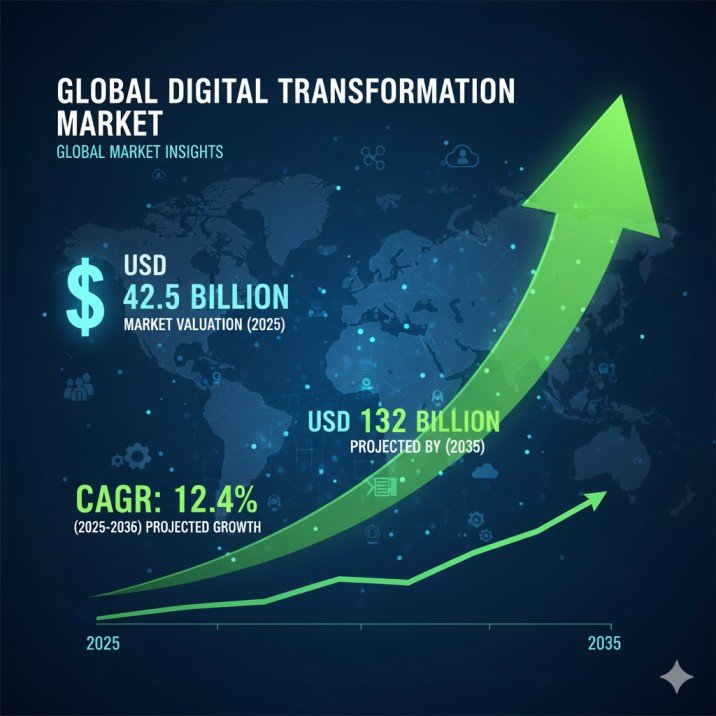
Market valuation in 2025USD 42.5 Billion
Projected market valuation in 2035USD 132 Billion
CAGR (2025–2035)12.4%
Dominant technologiesAI-based security systems, voice assistants, smart lighting, AI energy monitors.

AI in Homes Market Forecast 2025–2035: Smart Living, Smarter Technologies
Size, byProduct, 2024 - 2032{USD Billion}
CAGR: 12.40%AI in homes Market size is CAGR (2025–2035): 12.4% request a free sample copy
Reports Description
The AI in Homes Market represents a transformative shift in how households operate, blending automation, security, convenience, and sustainability. This report captures a decade-long outlook, tracking the growth trajectory from 2025 to 2035 across global and regional levels.
Download Sample Ask for Discount Request Customization
Market Significant Growth Factors
-
Increasing integration of AI with IoT and smart home ecosystems.
-
Surge in demand for voice-controlled assistants and AI-enabled surveillance systems.
-
Growing awareness of energy efficiency through AI automation.
-
Rise in single-person households and elderly population needing assistive tech.
-
Policy support and incentives for smart energy homes in developed nations.
Report Scope
|
Element |
Details |
|
Forecast Period |
2025 to 2035 |
|
Base Year |
2025 |
|
Regions Covered |
North America, Europe, Asia Pacific, Latin America, Middle East & Africa |
|
Key Segments |
Technology, Region, End-use, Deployment |
Report Coverage & Deliverables
|
Feature |
Details |
|
Coverage |
Global + 5 Key Regions |
|
Data Range |
2020 (historical), 2025 (base year), 2035 (forecast) |
|
Deliverables |
PDF Report, Excel Data Sheets, Regional Forecast Models |
|
Segmentation |
By Technology, Region, Deployment, End-use |
Recent Developments
-
Amazon’s integration of generative AI in Alexa for contextual home interaction.
-
Google’s Nest launching predictive energy-saving routines.
-
Huawei launching AIoT ecosystems for urban smart homes in Asia-Pacific.
Regional Insights
U.S Market Trends
High adoption of AI in suburban homes; incentives for energy-efficient smart systems.
Europe Trends
Policy-driven growth, especially in Germany and the Nordics; strong consumer awareness.
Germany Trends
Innovation hub for AI-appliances; surge in B2B smart housing models.
Asia Pacific Trends
Fastest-growing region; driven by urbanization, tech-savvy millennials, and government initiatives.
China Trends
Dominates the regional share; significant domestic production and smart city investments.
Estimated Regional Market Size for Smart Home/Connected Technologies (2025)
The estimates below are derived from the typical regional shares observed in the global Smart Home, AI in Security, and Smart Lighting markets for 2025, applied to the total market valuation of USD 42.5 Billion.
| Region | Estimated Market Share (2025) | Estimated Market Valuation (2025) | Key Drivers / Dominant Technologies |
| North America | 32.0% | USD 13.60 Billion | High consumer adoption, presence of major tech companies, demand for voice assistants and advanced AI-based security systems. |
| Europe | 27.0% | USD 11.48 Billion | Strong focus on smart lighting for energy efficiency, strict environmental regulations, and growing adoption of AI energy monitors. |
| Asia-Pacific (APAC) | 30.0% | USD 12.75 Billion | Fastest-growing region due to rapid urbanization, increasing middle-class income, large-scale smart city projects, and high demand for AI-based security. |
| Latin America, Middle East & Africa (LAMEA) | 11.0% | USD 4.67 Billion | Emerging market, driven by new construction, government investments in smart infrastructure, and adoption of basic smart security and lighting. |
| Total | 100% | USD 42.5 Billion |
Download Sample Ask for Discount Request Customization
End-use Insights
-
Residential HomesDominates the sector with smart lighting, climate control, and security systems.
-
Luxury HomesAdvanced AI assistants, real-time biometric authentication.
-
Elderly Care HomesAI-enabled fall detection, health monitoring.
Deployment Insights
-
Cloud-BasedPreferred for multi-device integration and continuous updates.
-
On-PremiseChosen for privacy-focused systems in high-net-worth homes.
Process Insights
-
Integration of AI algorithms with home IoT systems.
-
Predictive maintenance and automated task scheduling.
-
Real-time learning models adapting to user behavior.
Offerings Insight
-
ProductsAI home hubs, robotic cleaners, smart appliances.
-
ServicesInstallation, personalization, 24/7 AI assistant support.
Download Sample Ask for Discount Request Customization
Key Players
-
Amazon Inc.
-
Google LLC (Alphabet)
-
Samsung Electronics
-
Huawei Technologies
-
Xiaomi Corp.
AI in Homes Markets Segmented
1. By Technology
-
Voice Recognition AI
-
Facial Recognition AI
-
Gesture Control AI
-
Natural Language Processing (NLP)
-
Machine Learning Algorithms
-
Computer Vision Systems
2. By Deployment Type
-
Cloud-Based
-
On-Premise
3. By Component
-
Hardware (Sensors, Processors, Cameras)
-
Software (AI Algorithms, Mobile Apps)
-
Services (Installation, Maintenance, Consulting)
4. By End-use
-
Residential Homes
-
Luxury & Smart Homes
-
Elderly Care Facilities
-
Multi-dwelling Units (MDUs)
5. By Functionality
-
Energy Management
-
Security & Surveillance
-
Home Entertainment
-
Lighting Control
-
Climate Control
-
Health Monitoring
6. By Region
-
North America
-
Europe
-
Asia Pacific
-
Latin America
-
Middle East & Africa
Related Reports
- Automotive Interior Market by Component (HUD, Door Panel, Dome Module, Seat, Headliner, Center Console, Center Stack & O...
- Artificial Intelligence Market Size, Share & Trends Analysis Report By Solution, By Technology (Deep Learning, Machine L...
- Global Data Replication Software Market Size By Deployment Type (On-Premise, Cloud-Based), By Component (Software, Servi...
- Malaysia Customer Experience Business Process Outsourcing Market Size, Share & Trends Analysis Report By Outsourcing Typ...
- Premium Messaging Market Size, Share & Trends Analysis Report, By Region, By Application (BFSI, Retail, Entertainment & ...
- Intelligent Substation Inspection Robot Market: Growth, Trends, and Future Outlook Segment Forecasts, 2028 - 2035.
Table of Content
Table of Contents — AI in Homes Market Report
1. Executive Summary
1.1. Key Insights & Takeaways
1.2. Market Size & Forecast Snapshot
1.3. Strategic Recommendations
2. Introduction & Market Definition
2.1. Scope of the Report (AI-driven home applications, devices, services)
2.2. Key Concepts & Terminologies (AI, ML, NLP, IoT, smart home)
2.3. Research Methodology & Data Sources
3. Market Dynamics
3.1. Market Drivers (smart device adoption, demand for convenience, energy savings, security)
3.2. Market Restraints (data privacy, interoperability, cost)
3.3. Opportunities (aging population, health monitoring, home robotics)
3.4. Challenges (cybersecurity, consumer awareness, regulatory concerns)
3.5. Impact of COVID-19 & Remote Living
4. Technology Landscape
4.1. AI Hardware in Homes (sensors, cameras, processors, IoT hubs)
4.2. AI Software Platforms (voice assistants, predictive analytics, edge AI)
4.3. Connectivity Ecosystem (Wi-Fi, 5G, Zigbee, Z-Wave, Matter)
4.4. Cloud vs Edge AI for Smart Homes
4.5. Integration with Robotics & Automation
5. Market Segmentation
5.1. By Device Type
5.1.1. Smart Speakers & Voice Assistants
5.1.2. Smart Appliances (kitchen, laundry, cleaning)
5.1.3. Smart Security & Surveillance (CCTV, doorbells, sensors)
5.1.4. Smart Lighting & HVAC
5.1.5. Home Robots (cleaning robots, companion robots)
5.2. By Application
5.2.1. Security & Safety
5.2.2. Energy Management & Sustainability
5.2.3. Entertainment & Lifestyle
5.2.4. Health Monitoring & Elder Care
5.2.5. Household Management & Automation
5.3. By AI Capability
5.3.1. Natural Language Processing (NLP)
5.3.2. Computer Vision
5.3.3. Predictive Analytics & Machine Learning
5.3.4. Robotics & Motion AI
6. Consumer Insights & Adoption Trends
6.1. Demographics of Adoption (age, income, household type)
6.2. Preferences in AI-enabled Devices
6.3. Privacy Concerns & Consumer Trust
6.4. Subscription vs One-time Purchase Models
6.5. Impact of Lifestyle Changes on AI Adoption
7. Regional Analysis
7.1. North America (U.S., Canada)
7.2. Europe (UK, Germany, France, Nordics, etc.)
7.3. Asia-Pacific (China, Japan, South Korea, India, Australia)
7.4. Middle East & Africa
7.5. Latin America
7.6. Regional Adoption Drivers & Challenges
8. Market Size & Forecast
8.1. Historical Market Data (last 3–5 years)
8.2. Current Market Size Estimation
8.3. Forecast by Revenue & Volume (5–7 years outlook)
8.4. Forecast by Device, Application & Region
8.5. Scenario Analysis (baseline, optimistic, pessimistic)
9. Competitive Landscape
9.1. Market Share Analysis
9.2. Key Companies (Amazon, Google, Apple, Samsung, Xiaomi, etc.)
9.3. Emerging Start-ups & Innovators
9.4. Product Benchmarking (features, pricing, ecosystem compatibility)
9.5. M&A, Partnerships & Strategic Alliances
10. Regulatory & Policy Framework
10.1. Data Privacy Laws (GDPR, CCPA, UK DPA)
10.2. Cybersecurity Regulations for Smart Devices
10.3. Standards & Protocols (Matter, interoperability frameworks)
10.4. AI Ethics & Consumer Protection
11. Business Models & Pricing Analysis
11.1. Hardware Sales vs Subscription Models
11.2. AI-as-a-Service in Homes
11.3. Freemium Models (voice assistants, apps)
11.4. Cross-subsidization with Ecosystem Products
12. Supply Chain & Ecosystem Analysis
12.1. Component Suppliers (sensors, chips, batteries)
12.2. Device Manufacturers
12.3. AI Software Providers
12.4. Cloud & Connectivity Providers
12.5. Retail & Distribution Channels
13. Innovation & Future Trends
13.1. AI-powered Home Robotics (beyond cleaning robots)
13.2. Predictive & Adaptive Homes (context-aware automation)
13.3. Health-focused AI (elderly monitoring, telemedicine integration)
13.4. Green & Energy-efficient AI Homes
13.5. Home-to-Home AI Connectivity & Smart Communities
14. Risks & Challenges
14.1. Cybersecurity & Hacking Incidents
14.2. Consumer Resistance & Privacy Backlash
14.3. Supply Chain Disruptions
14.4. Competitive Price Pressure
15. Case Studies & Use Cases
15.1. AI-enabled Smart Apartments
15.2. Elderly Care at Home with AI
15.3. Energy-efficient Smart Homes
15.4. AI-driven Security Systems
16. Investment & Funding Landscape
16.1. Venture Capital Trends in Home AI Start-ups
16.2. Corporate Investments & Strategic Moves
16.3. M&A Activity in Smart Home & AI Market
17. Strategic Recommendations
17.1. For Manufacturers & AI Vendors
17.2. For Policymakers & Regulators
17.3. For Investors
17.4. For Consumers & End-users
18. Appendices
18.1. Research Methodology
18.2. Glossary of Terms
18.3. Abbreviations
18.4. Supporting Data Tables
19. Exhibits & Figures
19.1. Market Size & Growth Charts
19.2. Adoption Heatmaps by Region
19.3. Consumer Preference Surveys
19.4. Ecosystem Maps & Value Chain Diagrams
Key Players
Amazon Inc.
Google LLC (Alphabet)
Samsung Electronics
Huawei Technologies
Xiaomi Corp.