
Claim a Free Sample
Get a preview with key statistics, projections, and trends for this report. Ideal for quick insights.
Send Me a SampleNeed full access?
Purchase ReportPretzel Market Size & Trends
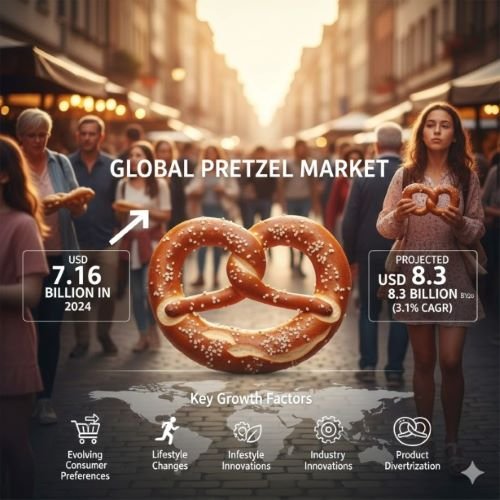
The global pretzel market size was estimated at USD 7.16 billion in 2024 and is projected to grow at a CAGR of 3.1% from 2025 to 2030. The market growth is driven by several key factors that reflect evolving consumer preferences, lifestyle changes, and industry innovations.
Size, byProduct, 2024 - 2032{USD Billion} Pretzel market size is projected to grow at a CAGR of 3.1% from 2025 to 2030. request a free sample copy
Pretzel Market Size, Share & Trends Analysis Report By Product (Salted, Unsalted, Flavored), By Type (Hard, Soft), By Distribution Channel (Supermarket & Hypermarkets, Specialty Stores, Online), By Region, And Segment Forecasts, 2025 - 2030
One of the primary reasons for this growth is the rising demand for healthy and convenient snacks. Consumers are increasingly seeking more nutritious snack options due to rising concerns about obesity and related health issues.
Pretzels are perceived as a healthier alternative to traditional snacks because they are low in fat and cholesterol, high in fiber, and often fortified with essential nutrients like iron and niacin. This aligns with the growing preference for convenient, on-the-go snacks that cater to busy lifestyles, especially among younger demographics.
Manufacturers keep improving by introducing new sizes, shapes, and flavors of pretzels in order to reach a broader market. Options such as gluten-free, organic, vegan, and gourmet pretzels have gained popularity as people become more health-conscious. In addition, unique offerings such as sweet or savory varieties and upscale snacks have extended the popularity of pretzels across different consumer groups. Diversification not only widens the popularity of the product but also helps maintain the existing customer base in addition to acquiring new customers.
The growth in retail and online platforms also helped in the growth of the pretzel market. The growth in the retail market globally, as well as growth in online platforms, has boosted the availability of pretzels globally. Online selling platforms are easy to use and provide access to more products, which has significantly improved market penetration. This is particularly visible in emerging economies where digitalization is fast to transform the manner in which consumers consume. The ease of online browsing and purchasing pretzels has simplified the purchase of pretzels by consumers, hence boosting sales and expanding market coverage.
Urbanization and increasing disposable incomes triggered altered consumption patterns with more consumers preferring premium food snacks like pretzels. Middle class in emerging economies is becoming health-conscious and are willing to pay for healthy food products. The trend provided new opportunities to expand in the pretzel industry. With increasing incomes among consumers, they would be inclined towards higher-quality foods with flavor and nutrition, pushing pretzel demand further.
The expanding foodservice industry, including restaurants, cafes, and movie theaters, has also been a force in demand for pretzels. Pretzels are either consumed with drinks like craft beer or are consumed as quick snacks. Additionally, the ubiquity of Western-style foods throughout the globe's markets has created additional demand for pretzels as a cross-cutting snack food.
Such integration into other dining experiences has helped to increase visibility and desirability and has made pretzels ubiquitous in most foodservice establishments. Sustainability trends and technological advancements propel the industry as companies adopt green packaging solutions and clean-labeling to meet consumer demands for eco-friendly products. Moreover, digitalization progress-such as artificial intelligence in manufacturing processes-improve supply chain efficiency and product quality, allowing manufacturers to meet growing demand while maintaining profitability. These efforts not only propel the growth of the market but also ensure its long-term sustainability. In general, the growth of the market is propelled by a combination of health-conscious consumer behavior, product innovation in offerings, increased accessibility through retail and online channels, lifestyle change, and sustainability efforts. These combined factors ensure a positive future for the continued growth of the market globally.
Product Insights
The salted pretzel segment led the market with the largest revenue share of 62% in 2024. Their popularity stems from the unique salty taste achieved by sprinkling coarse salt on the surface of the dough before baking. Salt enhances the flavor and adds texture, making salted pretzels a satisfying snack for many consumers. In addition, these pretzels are versatile and suitable for various occasions, such as movie nights, casual snacking, or pairing with beer at cultural events. Their ready-to-eat nature and simple ingredients-water, salt, flour, and yeast-make them convenient and health-friendly compared to other high-calorie snacks. The rising demand for low-fat and nutrient-rich snacks further propels their growth, especially in regions like North America, where health-conscious consumers prefer them as a healthier alternative to chips or fried snacks.
Unsalted pretzels cater to a niche, but growing market segment focused on health-conscious consumers who seek low-sodium options. As awareness of health risks associated with excessive salt consumption increases globally, unsalted pretzels are becoming an attractive choice for individuals managing conditions like hypertension or following low-sodium diets. Manufacturers are leveraging this trend by introducing whole-grain and gluten-free unsalted variants to appeal to wellness-focused demographics. While unsalted pretzels may lack the robust flavor of their salted counterparts, they are perceived as a cleaner-label option, aligning with broader consumer trends toward natural and minimally processed foods.
The flavored pretzels segment is expected to grow at the fastest CAGR of 4% from 2025 to 2030. Flavored pretzels are experiencing rapid growth due to innovation in snacking and evolving consumer tastes. Manufacturers are introducing diverse flavors ranging from sweet (e.g., cinnamon sugar, honey mustard) to savory (e.g., parmesan garlic, cheddar) and spicy (e.g., jalapeño ranch, buffalo). These creative offerings attract adventurous snackers looking for unique taste experiences. Flavored pretzels also benefit from their ability to cater to emotional needs; consumers often turn to these snacks during relaxing moments or social gatherings for both enjoyment and indulgence. The fusion of global and ethnic flavors further expands their appeal across different regions. Smaller brands and startups have successfully experimented with bold flavors to differentiate themselves in the competitive market.
Type Insights
Based on type, the hard pretzel segment led the market with the largest revenue share of 76.2% in 2024. Their practicality and convenience primarily drive the growth of hard pretzels. Hard pretzels have a longer shelf life than soft pretzels, making them ideal for storage and transportation. This durability appeals to consumers seeking snacks that can be stored for extended periods without losing quality, particularly in regions with limited access to freshly baked goods. Hard pretzels are also widely recognized for their satisfying crunch, enhancing their appeal as a snack option. Their simple ingredients-flour, water, yeast, and salt-make them a healthier alternative to fried or calorie-dense snacks, aligning with the growing demand for health-conscious eating. The popularity of hard pretzels in North America, especially in states like Pennsylvania, where they dominate production, further fuels their market growth. Moreover, e-commerce and organized retail channels have made hard pretzels more accessible to consumers globally.
The soft pretzels segment is expected to grow at the fastest CAGR of 3.4% over the forecast period. These freshly baked snacks are associated with artisanal and gourmet food trends, offering a smoother, doughy experience that many consumers find indulgent. Soft pretzels are often consumed in specific settings, such as festivals, bakeries, or sports venues, where they are served hot and fresh, creating a memorable snacking experience. Their appeal is further enhanced by innovations in flavors and toppings, such as cheese-stuffed or sweet-coated varieties, which cater to diverse taste preferences. The growing interest in premium snacks has also contributed to the expansion of the soft pretzel industry, particularly among consumers willing to pay more for high-quality products made from natural ingredients. Despite their shorter shelf life than hard pretzels, soft pretzels remain popular due to their nostalgic value and sensory appeal.
Distribution Insights
Based on distribution, the supermarkets and hypermarkets segment led the market with the largest revenue share of 45.2% in 2024. Their dominance is driven by their ability to offer various pretzel brands, flavors, and packaging sizes under one roof, giving consumers ample choices to suit their preferences. These stores provide convenience by serving as one-stop destinations where shoppers can purchase pretzels and other groceries and household items during routine shopping trips. In addition, supermarkets and hypermarkets are widely distributed across urban, suburban, and rural areas, making them easily accessible to a broad consumer base. Extended operating hours further enhance convenience for shoppers, allowing them to purchase pretzels anytime. The organized layout and promotional offers in these stores also encourage impulse purchases, boosting sales of pretzel products.
Specialty stores cater to niche markets by offering unique or premium pretzel products such as organic, gluten-free, or gourmet options. These stores appeal to health-conscious consumers prioritizing quality and specific dietary needs over price. Specialty stores often emphasize artisanal or locally made products, which resonate with consumers seeking authentic or handcrafted snack experiences. The growing trend of personalized shopping experiences has further fueled the growth of specialty stores as they provide curated selections tailored to specific consumer preferences. In addition, specialty stores are increasingly popular among consumers looking for innovative flavors or limited-edition pretzel varieties that may not be available in mainstream retail outlets.
Regional Insights
North America- dominated the pretzel industry with the largest revenue share of 41.92% in 2024. The North American pretzel market is driven by a mix of changing consumer behavior, lifestyle transitions, and market innovations. Pretzels are also a healthy snacking choice as they contain less fat and are rich in nutrients, such as fortified flour containing vitamins and iron which aids digestion and metabolism. This aligns with the increasing demands of working professionals and millennials for easy, ready-to-consume food. New flavors such as parmesan, garlic, and barbecue have also been instrumental in expanding the market by appealing to diverse tastes. Also, the growth of online e-commerce sites has increased the reach of pretzels among consumers, allowing them to purchase them online with convenience. Organized retail outlets such as supermarkets and hypermarkets also play a part in driving sales by offering a range of pretzel products under one stop. Rising disposable incomes and changes in lifestyle towards healthier snacks have also propelled the market in North America.
Regional Market Size Table — Global Pretzel Market (USD Billion)
Global MarketUSD 7.16 Bn (2024) → ~USD 8.58 Bn (2030)
CAGR (2025–2030)3.1%
| Region | 2024 Market Size (USD Bn) | 2030 Market Size (USD Bn) | CAGR (2025–2030) |
|---|---|---|---|
| North America | 2.72 | 3.26 | 3.1% |
| Europe | 2.29 | 2.75 | 3.1% |
| Asia Pacific | 1.43 | 1.71 | 3.1% |
| Latin America | 0.43 | 0.52 | 3.1% |
| Middle East & Africa | 0.29 | 0.34 | 3.1% |
| Total Global Market | 7.16 | 8.58 | 3.1% |
U.S. Pretzel Market Trends
The U.S. pretzel market established the largest market revenue share in North America in 2024. The U.S. dominates the market due to its strong cultural affinity towards pretzels and its well-established manufacturing sector. Pretzels are an integral part of American culture, readily available at sporting events, movie theaters, and as regular snacks. The country has numerous pretzel brands that produce a vast variety of products, from hard and soft pretzels, to flavored pretzels, and gluten-free pretzels, which are popular among a broad range of consumer preferences. The well-established distribution channel in the U.S., ranging from supermarkets to specialty stores, and online stores, makes pretzels readily accessible through various channels of retailing. Furthermore, the introduction of healthier forms of pretzels with added essential nutrients has become popular among health-conscious consumers seeking healthy snack foods. The success of the U.S. in developing flavors and packaging innovations and taking advantage of its cultural affinity towards pretzels has established it as the largest pretzel consumption and production market in North America.
Asia Pacific Pretzel Market Trends
Asia Pacific pretzel market is expected to register a high CAGR of 3.6% from 2025-2030. Growing demand for Western-style snacks in urban areas is one of the key growth drivers. As a result of urbanization and industrialization, consumers are seeking easy-to-consume, on-the-go snacks suitable for their lifestyle. Pretzels, being an easy-to-consume and packable snack, are a perfect choice for the trend. Moreover, product and flavor innovation has been propelling market growth. Companies are launching local flavors to win consumers and improve regional penetration. For instance, chains such as Auntie Anne's are launching specialty flavors such as strawberry and milk cream-flavored pretzels to meet local tastes in overseas markets such as Japan. Furthermore, increased production capacity of many regional players has facilitated greater fulfillment of increasing consumer demand, thereby driving market growth. The Western food trends' cultural influence also facilitates the growth of pretzels in the Asia Pacific. Urban young populations are adopting Western-style snacks, including soft pretzels, which are gaining popularity in countries like China and Japan. Growing quick-service restaurants, cafes, and international snack firms in the region introduce new customers to the product, extending the market's reach and appeal. Overall, lifestyle changes, product innovation, and cultural synergies drive the Asia Pacific region's high growth of the pretzel market.
Key Pretzel Company Insights
The competitive landscape of the pretzel industry is characterized by a mix of large multinational companies and smaller local players, creating a highly competitive environment. Key players in the market include major brands such as ConAgra Foods, Frito-Lay, Snyder's-Lance, Mars, Auntie Anne's, Campbell Soup Co., General Mills Inc., Herr Foods Inc., and Intersnack Group GmbH & Co. KG. These companies focus on product innovation, diversification, and strategic acquisitions to expand their market share and geographical reach.
Key Pretzel Companies
The following are the leading companies in the pretzel market. These companies collectively hold the largest market share and dictate industry trends.
- PepsiCo, Inc.
- Utz Brands
- The Campbell Soup Company
- J&J Snack Foods
- Mr. Pretzels
- Focus Brands
- Pretzels Inc.
- Intersnack Group GmbH & Co.
- Old Dutch Foods
- Conagra Foods
- General Mills Inc.
- Herr Foods Inc.
- Mars Inc.
- Wetzel's Pretzels
- Wise Foods
Pretzel Market Report Scope
|
Report Attribute |
Details |
|
Market size value in 2025 |
USD 7.38 billion |
|
Revenue forecast in 2030 |
USD 8.61 billion |
|
Growth rate |
CAGR of 3.1% from 2025 to 2030 |
|
Base year for estimation |
2024 |
|
Historical data |
2018 - 2023 |
|
Forecast period |
2025 - 2030 |
|
Quantitative units |
Revenue in USD million/billion, and CAGR from 2025 to 2030 |
|
Report coverage |
Revenue forecast, company ranking, competitive landscape, growth factors, and trends |
|
Segments covered |
Product, type, distribution channel, region |
|
Regional scope |
North America; Europe; Asia Pacific; Central & South America; Middle East & Africa |
|
Country scope |
U.S; Canada; Mexico; Germany; UK; France; Italy; Spain; China; Japan; India; Australia & New Zealand; South Korea; Brazil; UAE |
|
Key companies profiled |
PepsiCo, Inc.; Utz Brands; The Campbell Soup Company; J&J Snack Foods; Mr. Pretzels; Focus Brands; Pretzels Inc.; Intersnack Group GmbH & Co.; Old Dutch Foods; Conagra Foods; General Mills Inc.; Herr Foods Inc.; Mars Inc.; Wetzel's Pretzels; Wise Foods |
|
Customization scope |
Free report customization (equivalent up to 8 analysts working days) with purchase. Addition or alteration to country, regional & segment scope. |
|
Pricing and purchase options |
Avail customized purchase options to meet your exact research needs. Explore purchase options |
Global Pretzel Market Report Segmentation
This report forecasts revenue growth globally, regionally, and country-wide and analyzes the latest industry trends and opportunities in each sub-segment from 2018 to 2030. For this study, Grand View Research has segmented the global pretzel market report by material type, type, distribution channel, and region.
-
Product Outlook (Revenue, USD Million, 2018 - 2030)
-
Salted
-
Unsalted
-
Flavored
-
-
Type Outlook (Revenue, USD Million, 2018 - 2030)
-
Hard
-
Soft
-
-
Distribution Outlook (Revenue, USD Million, 2018 - 2030)
-
Supermarket & Hypermarkets
-
Specialty Stores
-
Online
-
Others
-
-
Regional Outlook (Revenue, USD Million, 2018 - 2030)
-
North America
-
U.S.
-
Canada
-
Mexico
-
-
Europe
-
Germany
-
UK
-
France
-
Italy
-
Spain
-
-
Asia Pacific
-
China
-
Japan
-
India
-
Australia & New Zealand
-
South Korea
-
-
Central & South America
-
Brazil
-
-
Middle East & Africa
-
UAE
-
-