
Claim a Free Sample
Get a preview with key statistics, projections, and trends for this report. Ideal for quick insights.
Send Me a SampleNeed full access?
Purchase ReportMarket Size & Trends
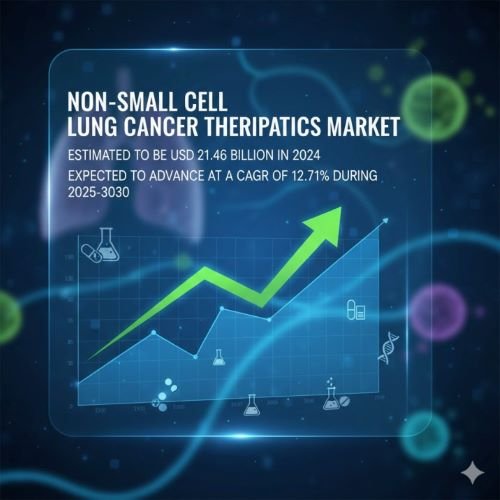
The size of the global non-small cell lung cancer therapeutics market was estimated to be USD 21.46 billion in 2024 and is expected to advance at a CAGR of 12.71% during 2025-2030.Size, byProduct, 2024 - 2032{USD Billion} Non-small cell lung cancer therapeutics market is expected to advance at a CAGR of 12.71% during 2025-2030. request a free sample copy
non-small cell lung cancer therapeutics market size was estimated at USD 21.46 billion in 2024 and is projected to grow at a CAGR of 12.71% from 2025 to 2030
The growth of the market is due to the rising rate of patients suffering from lung disorders. Increased use of tobacco products, the decline in air quality as a result of air pollution, and unhealthy living standards have also supported the growth of lung cancer. In addition, greater investments made by large medical institutions for R&D of drugs and treatments against NSCLC have led to the expansion of this market.
The growing incidence of lung cancer, mainly prompted by excessive smoking and tobacco consumption, has widened the market largely. Smoking accounts for approximately 90% of lung cancer instances as a result of carcinogenic chemical exposure. With lung cancer diagnoses in the United States expected to reach over 226,000 cases by 2025, the need for successful prevention, diagnosis, and treatment is on the rise. Exposure to harmful substances like radon gas, air pollution, second-hand smoking, and unsafe water intake are also factors behind the rising disease burden.
The World Health Organization (WHO) classifies tobacco as a significant health risk, accounting for more than 8 million deaths every year, with low- and middle-income nations being disproportionately affected. WHO supports strategies like smoke-free legislation, advertising bans, and increased taxation to lower tobacco use and encourage quitting smoking.
In reaction to this increasing demand for therapies, market participants are developing treatment platforms, especially in immuno-oncology. Immune-modulating treatments and T-cell-based platforms are growing clinical indications, enhancing therapeutic breadth, and targeting treatment-resistant cancers. These initiatives also promote regulatory involvement, generate investment, and catalyze strategic partnerships. For instance, in April 2024, ImmunityBio reported encouraging survival data from the QUILT 3.055 trial, where ANKTIVA (nogapendekin alfa inbakicept-pmln), combined with checkpoint inhibitors, almost doubled survival among 2nd- and 3rd-line NSCLC patients refractory to previous therapies. A June 2024 FDA meeting is scheduled to discuss registration, with the company also preparing for ANKTIVA's NMIBC launch.
Report Coverage & Deliverables
- Competitive benchmarking
- Historical data & forecasts
- Company revenue shares
- Regional opportunities
- Latest trends & dynamics
Pipeline Analysis
The dynamic treatment paradigm for non-small cell lung cancer (NSCLC) is being defined by the unprecedented progress in clinical research and growth of immuno-oncology pipelines. The advent of immune checkpoint inhibitors, monoclonal antibodies, and biomarker-driven therapies has spurred the discovery of new treatments for enhancing patient outcomes. While top pharmaceutical players drive activities in both first-line and adjuvant/neoadjuvant environments, the NSCLC pipeline illustrates a transformation toward multi-modal, personalized strategies that tap into unmet clinical need. Pipeline activity is driving the market growth directly by enhancing product differentiation, lengthening treatment duration, and broadening patient populations eligible for treatment. It also enables competitive innovation and stimulants regulatory interactions, spurring commercial opportunities and investment interests globally.
In December 2024, Incyte announced positive results from its Phase 3 POD1UM-304 trial assessing retifanlimab, a humanized monoclonal antibody to PD-1, in combination with platinum-based chemotherapy for untreated metastatic NSCLC. The trial showed a median overall survival of 18.1 months compared to 13.4 months for the control arm, achieving its primary endpoint with statistically significant improvements. Secondary endpoints such as overall response rate and progression-free survival also improved, enabling a 2025 sBLA filing in the U.S.
Other significant players including AstraZeneca, Merck, Amgen, and Bristol Myers Squibb are pushing strong portfolios targeted at early- and advanced-stage NSCLC. Though problems such as tumor heterogeneity and resistance to immunotherapy still remain, depth and diversity in the pipeline emphasize an encouraging market pathway fueled by sustained innovation, better efficacy profiles, and widening therapeutic uses.
Market Concentration & Characteristics
The level of innovation is pronounced in the market with an increasing amount of research and development. For example, as per the National Cancer Institute, a combination of BRAF-targeted medication dabrafenib (Tafinlar) and trametinib (Mekinist) targeting a protein known as MEK has been approved to treat patients with NSCLC who have a specific mutation in the BRAF gene. B-Raf protein mainly transmits signals in cells and is also important for cell growth. Some mutations in the BRAF gene may stimulate cell growth and spread of NSCLC cells.
A few players use mergers & acquisitions to consolidate their market positions. Through this tactic, firms become capable of raising their capabilities, diversifying their product offerings, and enhancing competency. For example, in November 2024, Roche said it had completed a merger agreement to acquire Poseida Therapeutics, Inc., a leader in public clinical-stage biopharmaceutical firm in donor-derived CAR-T cell therapies.
The market regulations define standards for safety, efficacy, and accessibility. They regulate approval procedures, production standards, labeling, and monitoring. For example, the American Cancer Society's Oncology Navigation (ACS LION) standardized training and credentialing program enables navigators to provide vital support to patients and families dealing with cancer. The program satisfies all of the training requirements for "Principal Illness Navigation" reimbursement by the Centers for Medicare & Medicaid Services (CMS) and meets Professional Oncology Navigation (PONT) standards. Compliance is essential for businesses to bring in and maintain their products, and regulations safeguard patients by reducing risks and providing correct information.
Service providers are taking strategic steps to take facilities to rural regions of the world, attempting to minimize the necessity for patients and caregivers to travel to hospitals and provide them with more time to lead their normal lives. For example, in July 2024, AstraZeneca's Global Capability Centre (GCC), AstraZeneca India Private Limited (AZIPL), plans to invest 250-crore rupees (USD 30 million) to scale up its Global Technology and Innovation Centre (GITC) in various regions of India, including close to 1,300 roles aimed at increasing efficiency, driving innovation, and process simplification across the organization across the world.
The degree of regional growth of the industry is high because of the increasing demand for advanced treatment in densely populated areas. For example, in May 2024, Healthcare Global Enterprises Limited, a healthcare service provider, grew its cancer care facilities to two new locations in Bengaluru, India. The new facilities provide customized treatment, high-precision diagnosis, and full-care.
Type Insights
The adenocarcinoma segment led the market in 2024 with a market share of 43.39% in 2024 because the population has increased that uses tobacco and other items for smoking. Addiction to smoking is one of the key reasons why patients have adenocarcinoma. The segment is increasing because adenocarcinoma is detected at an early stage, so treatment becomes easy. In addition, the rise in the targeted drugs utilized specifically to target adenocarcinoma has also driven the market growth.
Treatment Insights
The targeted therapy segment dominated the market in 2024 with a share of 50.66% in 2024. The factors responsible for the market growth are the benefits of this therapy, such as an increased number of targeted therapeutics and a low percentage of side effects during the treatment. Targeted therapies are specifically used to disrupt cancer cell growth signals. Targeted therapies can be customized according to the patient type, which helps in minimizing the side effects. Hence, these reasons are responsible for the upward market growth of this segment.
The immunotherapy segment is expected to grow at a significant CAGR over the forecast period due to introduction of new products in the immunotherapy segment and an increase in the preference for immunotherapy to treat cancer. Immunotherapy uses the immunity system to cure and control the cancer-causing cells in the patient’s body. Furthermore, increased investments by key market players to develop better products to optimize the treatment have also helped in the market growth of this segment.
Distribution Channel Insights
The hospital pharmacy segment led the market with 66.89% market share in 2024. The growth in the market was influenced by the rise in the number of hospitalized patients with NSCLC. Growth in the number of medicines and treatments to cure NSCLC has also fueled the growth of the segment's market, as major market players are aiming to put more regulatory-approved drugs into practice to cure these diseases. The above-stated factors are accountable for the market growth of hospital pharmacy segment.
The retail pharmacy and drug store segment is expected to experience a high CAGR during the forecast period, due to the growing availability of regulatory-approved drugs for consumption by patients looking to cure NSCLC. Growing incidence of lung cancer has led to a high demand for drugs and treatments. Hence, retail pharmacies and drug stores ensure easy availability of drugs. Also, due to awareness about cancer treatment, the number of patients looking for taking medicines that assist in lung disorder treatment has grown. Thus, these aspects have led to market expansion in this segment.
Regional Insights
North America Non-small Cell Lung Cancer (NSCLC) therapeutics market led the world with a market share of 35.41% in 2024. This growth was due to the availability of developed healthcare centers and growing awareness about cancer therapies. The market is also increasing because of the availability of major market players who are aiming to implement new and more efficient medicines to cure NSCLC. An increase in disposable income has raised the uptake of expensive treatments and medicines, which also contributes to the market expansion of this region.
Regional Market Size Breakdown (2024–2030)
| Region | Market Size (2024, USD Billion) | Share (%) | CAGR (2025–2030) | Projected Market Size (2030, USD Billion) | Key Growth Drivers |
|---|---|---|---|---|---|
| North America | 8.36 | 39.0% | 11.8% | 16.27 | High adoption of immunotherapies (PD-1/PD-L1 inhibitors), strong biomarker testing infrastructure, presence of key pharma companies, and robust reimbursement support. |
| Europe | 5.16 | 24.0% | 11.5% | 9.97 | Growing availability of biosimilars, expanding precision medicine programs, and rising use of targeted therapies across EU5 nations. |
| Asia-Pacific | 5.80 | 27.0% | 14.6% | 13.07 | Rapid increase in NSCLC incidence, rising healthcare expenditure, improving access to innovative drugs in China and Japan, and local manufacturing partnerships. |
| Latin America | 1.07 | 5.0% | 12.0% | 2.12 | Expanding oncology infrastructure, gradual regulatory alignment, and improving drug accessibility in Brazil and Mexico. |
| Middle East & Africa | 1.07 | 5.0% | 10.5% | 1.95 | Increasing investments in oncology care, growing awareness, and entry of multinational pharma companies into GCC and South Africa. |
| Total (Global) | 21.46 | 100% | 12.71% (overall) | 43.38 | — |
US Non-small Cell Lung Cancer Therapeutics Market Trends
The Non-small Cell Lung Cancer (NSCLC) therapeutics market in the U.S. led themarket in the North America region in 2024 with the highest revenue share. This significant share is due to the increase in the smoking addicted population and air pollution. The availability of major medical centers in the country assists in detecting early cancer stages. Large corporations are investing heavily in the formulation of medicines and therapeutics, which is supporting market growth. In addition, rising awareness pertaining to cancer therapy has raised the number of patients undergoing diagnosis and treatment for their conditions.
Europe Non-small cell lung cancer therapeutics market Trends
Europe Non-small Cell Lung Cancer therapeutics market was recognized as a profitable regional market because of the availability of leading medical centers and a rise in the population addicted to smoking. In addition, government and several NGOs' enhanced awareness regarding cancer treatment has raised the number of patients undergoing NSCLC treatment. Thus, these are the reasons for the favorable market growth in this region.
The UK non-small cell lung cancer therapeutics market is anticipated to develop at a high growth rate owing to the rising incidence of cancer diseases and launch of new drugs and therapies for the treatment of NSCLC. Growing awareness and early detection campaigns have boosted the diagnosis rates of several cancer disorders. In addition, a rise in the number of drugs approved by the regulatory authorities has also contributed to the market growth of NSCLC therapeutics in this nation.
Non-small Cell Lung Cancer (NSCLC) market for therapeutics in Germany is fueled by its sophisticated healthcare infrastructure, universal access to molecular profiling diagnostic tools, and early embracement of precision therapies. Reimbursement guidelines and hospital treatment guidelines promote the incorporation of targeted and immunotherapy treatments.
France Non-small Cell Lung Cancer (NSCLC) therapeutics market is growing owing to high disease incidence, favorable national health programs, and rising use of biomarker-guided therapies. The centralized healthcare system ensures equal access to new therapeutics.
Asia Pacific Non-Small Cell Lung Cancer Therapeutics Market Trends
Asia Pacific Non-small Cell Lung Cancer (NSCLC) therapeutics market is showing a boost fueled by an increasing incidence of lung cancer, investment by governments in oncology care, and expanding regional alliances for increasing availability of biologics and targeted medications.
Japan Non-small Cell Lung Cancer (NSCLC) drugs market is fueled by aging populations, emphasis on cancer early detection, and adoption of personalized medicine in oncology treatment guidelines. Indigenous pharmaceutical innovation and regulatory agility also fuel market growth.
Non-small Cell Lung Cancer (NSCLC) drugs market in China is expanding quickly owing to increased smoking-related cancer burden, policy-driven speedup of drug launches, and growing insurance coverage of targeted and immune-based medicines.
Latin America Non-small Cell Lung Cancer Therapeutics Market Trends
Latin America Non-small Cell Lung Cancer (NSCLC) therapeutics market is witnessing steady growth fueled by growing urbanization-related risk factors, incremental healthcare system modernization, and increased public health emphasis on cancer control programs.
Brazil Non-small Cell Lung Cancer (NSCLC) therapeutics market is supported by growing rates of diagnosis, enhanced oncology treatment infrastructure, and government prioritization of access to critical therapies through public health avenues.
Middle East & Africa Non-small Cell Lung Cancer Therapeutics Market Trends
The Middle East & Africa Non-small Cell Lung Cancer (NSCLC) therapeutics market is developing on account of rising incidence of respiratory cancers, expanded investment in the healthcare system, and government encouragement for expanding the capabilities of cancer care.
Saudi Arabia Non-small Cell Lung Cancer (NSCLC) treatment market is growing based on the increasing incidence of lung cancer, strategic healthcare reforms, and efforts towards increasing access to advanced oncology therapeutic technologies.
Key Non-small Cell Lung Cancer Therapeutics Company Insights
The Non-small Cell Lung Cancer therapeutics industry is undergoing dynamic shifts as next-generation therapies reshape the treatment paradigm. In 2024, the competitive landscape has become increasingly multifaceted, with a growing number of targeted therapies, immunotherapies, and combination regimens achieving regulatory clearance and expanding globally. These advancements are enhancing therapeutic precision and survival outcomes for patients across disease stages.
Market-leading pharmaceutical companies are advancing differentiated portfolios through biomarker-driven drug development, tumor-agnostic approvals, and combination therapy protocols. Strategic collaborations-spanning research institutions, biotechnology firms, and diagnostics companies-are reinforcing pipeline strength and accelerating clinical translation. These shifts are fostering a competitive, innovation-intensive environment that continues to expand patient access, reduce mortality, and redefine standards of care in lung oncology.
Key Non-small Cell Lung Cancer Therapeutics Companies
The following are the leading companies in the non-small cell lung cancer therapeutics market. These companies collectively hold the largest market share and dictate industry trends.
- F. Hoffmann-La Roche Ltd.
- Mylan N.V.
- Teva Pharmaceutical Industries Ltd.
- Sanofi
- Pfizer Inc.
- GSK plc
- Novartis AG
- Bayer AG
- Eli Lilly and Company
- Merck & Co., Inc.
Recent Developments
-
In April 2025, Akeso Inc. gained approval from China's National Medical Products Administration (NMPA) for Ivonescimab, a first-in-class bispecific antibody against PD-1 and VEGF, as a monotherapy for the first-line treatment of patients with advanced, PD-L1-positive (tumor proportion score ≥1%) non-small cell lung cancer (NSCLC) without EGFR or ALK mutations.
In August 2024, AstraZeneca's Imfinzi, a form of immunotherapy for the treatment of multiple cancers in conjunction with chemotherapy, was greenlit by the U.S. FDA to treat adult patients with resectable early-stage NSCLC and no documented Epidermal Growth Factor Receptor (EGFR) mutations or Anaplastic Lymphoma Kinase (ALK) rearrangements.
In October of 2024, Novocure reported that the U.S. Food and Drug Administration (FDA) approved Optune Lua for the treatment of adult patients with metastatic non-small cell lung cancer (NSCLC) who have had their disease progress following a platinum-based chemotherapy regimen. Optune Lua is a portable device that is used to administer Tumor Treating Fields (TTFields), a new therapy that applies alternating electric fields to interfere with the division of cancer cells, causing death.
In May 2024, Pfizer Inc. reported longer-term follow-up results from the phase 3 CROWN trial comparing LORBRENA with XALKORI for the treatment of anaplastic lymphoma kinase (ALK)-positive advanced non-small cell lung cancer (NSCLC). With a 5-year median follow-up, there was an 81% decrease in the rate of disease progression.
In March 2023, F. Hoffmann-La Roche Ltd. issued the approval of VENTANA PD-L1 (SP263) Assay as a companion diagnostic to detect non-small cell lung cancer (NSCLC) patients. The firm felt that through this launch, more patients would be able to receive an extra immunotherapy option.
Non-Small Cell Lung Cancer Therapeutics Market Report Scope
|
Report Attribute |
Details |
|
Market size value in 2025 |
USD 24.13 billion |
|
Revenue forecast in 2030 |
USD 43.89 billion |
|
Growth Rate |
CAGR of 12.71% from 2025 to 2030 |
|
Actual data |
2018 - 2024 |
|
Forecast period |
2025 - 2030 |
|
Quantitative units |
Revenue in USD million/billion and CAGR from 2025 to 2030 |
|
Report coverage |
Revenue forecast, company ranking, competitive landscape, growth factors, and trends |
|
Segments covered |
Type, treatment, distribution channel, region |
|
Regional scope |
North America; Europe; Asia Pacific; Latin America; MEA |
|
Country scope |
U.S.; Canada; Mexico; UK; Germany; France; Italy; Spain; Denmark; Sweden; Norway; Japan; China; India; Australia; South Korea; Thailand; Brazil; Argentina; South Africa; Saudi Arabia; UAE; Kuwait |
|
Key companies profiled |
F. Hoffmann-La Roche Ltd.; Mylan N.V.; Teva Pharmaceutical Industries Ltd.; Sanofi; Pfizer Inc.; GSK plc; Novartis AG; Bayer AG; Eli Lilly and Company; Merck & Co., Inc. |
|
Customization scope |
Free report customization (equivalent up to 8 analysts working days) with purchase. Addition or alteration to country, regional & segment scope. |
|
Pricing and purchase options |
Avail customized purchase options to meet your exact research needs. Explore purchase options |
Global Non-Small Cell Lung Cancer Therapeutics Market Report Segmentation
-
Type Outlook (Revenue, USD Million, 2018 - 2030)
-
Squamous Cell Carcinoma
-
Large Cell Carcinoma
-
Adenocarcinoma
-
Others
-
-
Treatment Outlook (Revenue, USD Million, 2018 - 2030)
-
Chemotherapy
-
Targeted Therapy
-
Immunotherapy
-
Others
-
-
Distribution Channel Outlook (Revenue, USD Million, 2018 - 2030)
-
Hospital Pharmacy
-
Drug Store and Retail Pharmacy
-
Online Pharmacy
-
-
Regional Outlook (Revenue, USD Billion, 2018 - 2030)
-
North America
-
U.S.
-
Canada
-
Mexico
-
-
Europe
-
UK
-
Germany
-
France
-
Italy
-
Spain
-
Denmark
-
Sweden
-
Norway
-
-
Asia Pacific
-
Japan
-
China
-
India
-
Australia
-
South Korea
-
Thailand
-
-
Latin America
-
Brazil
-
Argentina
-
-
Middle East and Africa (MEA)
-
South Africa
-
Saudi Arabia
-
UAE
-
Kuwait
-
-