
Claim a Free Sample
Get a preview with key statistics, projections, and trends for this report. Ideal for quick insights.
Send Me a SampleNeed full access?
Purchase ReportItaly Gluten-free Products Market Trends
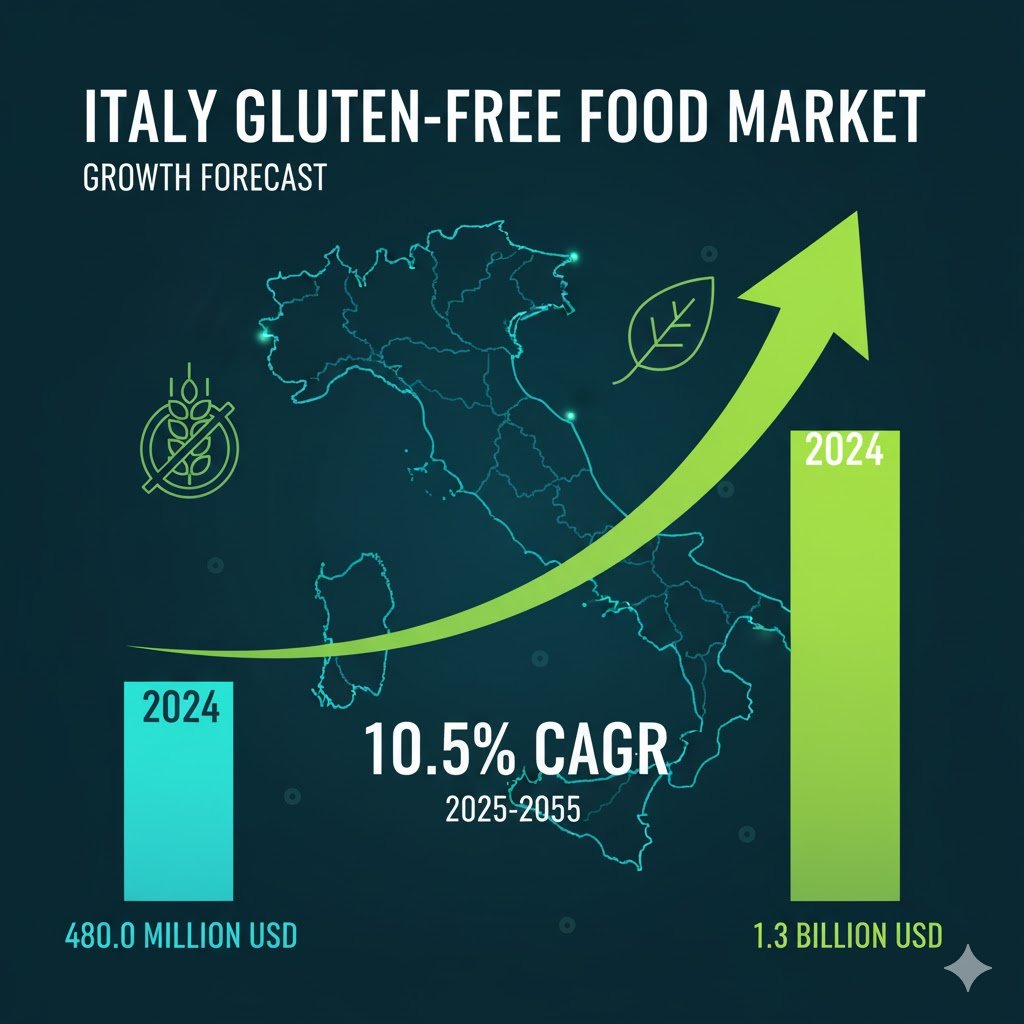
The size of the Italy gluten-free market was estimated at USD 480.0 million in 2024 and is projected to expand at a CAGR of 10.5% during the period from 2025 to 2035.
Size, byProduct, 2024 - 2032{USD Billion} Italy gluten-free market size is projected to expand at a CAGR of 10.5% during the period from 2025 to 2035. request a free sample copy
Italy Gluten-free Products Market Size, Share & Trends Analysis Report By Product (Bakery Products, Dairy/Dairy Alternatives), By Distribution Channel, And Segment Forecasts, Key Companies And Competitive Analysis,
The Italian gluten-free market is witnessing rapid growth as a result of an interplay of health consciousness, increasing diagnoses of gluten-related disorders, and changing consumer behavior. Historically famous for its wheat food, including pasta, pizza, and bread, Italy has recently experienced a visible rise in the demand for gluten-free versions of these foods, enabling people to indulge in the foods they love without jeopardizing their health.
Italy boasts one of Europe's highest diagnosed rates of celiac disease due to effective screening programs and robust public health campaigns. Consequently, a high proportion of Italians adopt a strict gluten-free diet out of medical requirement. Moreover, increased awareness of non-celiac gluten sensitivity and a general sense that gluten-free foods are healthier and less difficult to digest have caused many non-celiac consumers to adopt gluten-free dietary patterns.
Additionally, increased awareness of health and well-being among Italians has led many to pursue gluten-free dietary intake as a lifestyle option even without a doctor's prescription. Although there is conflicting scientific evidence, a portion of consumers feels that lowering intake of gluten can enhance digestion, decrease inflammation, or help control weight. This more extensive wellness-aware population is fueling demand for a host of gluten-free foods beyond medical necessity.
In light of the severity of celiac disease, the Italian government offers a monthly allowance of up to €140 to those affected, making gluten-free foods more accessible. In addition, government assistance, including subsidies for those diagnosed to buy gluten-free foods, has promoted supply and demand. Italian consumers, who are traditionally very attached to traditional food, can now enjoy a broad range of gluten-free alternatives to pasta, bread, and baked products, due to food technology and innovation. This availability, combined with increasing interest in wellness, clean food, and specialty diets, drives the gluten-free market in Italy.
Italian manufacturers have spent money on research and development to develop gluten-free foods that are similar in taste and texture to the original Italian food. This technology has increased the number and popularity of gluten-free products. For example, in November 2024, Rich Products extended its Authentically Italian Portfolio with two new productsthe Gluten Free Cauliflower Pinsa and the Roman Style Pizza Dough Ball. The Cauliflower Pinsa is a plant-based, gluten-free, parbaked rice-based crust with buckwheat flour and cauliflower, providing a soft center and crunchy exterior for fast, oven-ready preparation. The Roman-style dough ball, produced with high-hydration "00" flour, provides true Italian texture and versatility for use in a variety of dishes. These introductions meet the increasing demand for artisanal, gluten-free foods, particularly among Millennials and Gen Z consumers in quick-service restaurants and convenience stores.
Report Coverage & Deliverables
- Competitive benchmarking
- Historical data & forecasts
- Company revenue shares
- Regional opportunities
- Latest trends & dynamics
Consumer Insights
Italy's market for gluten-free food is expanding as a result of heightened medical awareness, government support, and changing lifestyles among consumers. With approximately 1% of Italians-more than 600,000 individuals-diagnosed with celiac disease, there is a compelling, medically based demand for gluten-free food. To aid these individuals, the Italian government offers monthly vouchers (up to 140 euros) to enable them to afford the more expensive gluten-free food, so that those in need can benefit from safe alternatives.
In addition, Italy's rich food culture has stimulated innovative versions of classic foods, creating the remarkable gluten-free chain of more than 4,000 restaurants throughout the country. Innovations like gluten-free pizza dough perfected in Naples have assisted the integration of gluten-free foods into daily diets, making them nutritionally suitable and gastronomically desirable. As such trends go, the Italian market for gluten-free foods will continue to grow, fueled by both dietary requirements and lifestyle demands.
Italy's long-standing food culture-perhaps particularly with pasta, pizza, and bread-has undergone much gluten-free innovation. Manufacturers have created excellent gluten-free renditions of popular dishes from rice, corn, buckwheat, and chickpea ingredients while preserving taste and texture. This food transformation allows consumers to better enjoy traditional taste without gluten.
In January 2025, Di Marco, the leading Italian miller of flours and bases for pinsa romana, purchased a majority stake in Pizzami, the well-established producer of gluten-free pizzas, pinsas, and baked products. The move, done in collaboration with the Galati family (Pizzami's founders), reinforces Di Marco's leadership in the gluten-free market and adds new products to its portfolio for food service and retail markets. Parma-based Pizzami is the third-largest Italian manufacturer of gluten-free baked goods, exporting to all over the world. The acquisition fits into Di Marco's accelerated growth pattern, doubling turnover to €60 million in 2024, and comes on the heels of opening its U.S. subsidiary, Di Marco North America Corporation. The two companies hope to capitalize on each other's strengths to stimulate innovation and reinforce market leadership in the gluten-free business.
Distribution Channel Insights
Sales via supermarkets & hypermarkets contributed a revenue share of 30.7% in 2024. Italians like to purchase gluten-free items from supermarkets and hypermarkets because of the extensive range, convenience, and quality control these stores provide. These stores have separate gluten-free sections filled with familiar brands and certified products, allowing consumers to easily find safe and varied products in one location. Competitive pricing, regular promotions, and being able to shop for everything that a household might need under one roof also contribute to their popularity. Further, supermarkets frequently team up with health authorities and gluten-free societies, further building consumers' trust in the genuineness and safety of the product.
Online sales of gluten-free Italian products are anticipated to increase at a CAGR of 11.6% from 2025 to 2035. People in Italy increasingly rely on online shops for buying gluten-free food because of their convenience, greater variety, and easy accessibility. Online shops generally have a higher variety of niche and foreign gluten-free brands which might not be found in domestic shops. For individuals with severe diet requirements, online shopping enables them to quickly scan ingredient labels and certifications prior to buying. Additionally, home delivery is convenient and saves effort and time, particularly for customers residing in small towns or with hectic lives. Deals and subscription facilities are additional advantages that make online purchases of gluten-free products more attractive.
Key Italy Gluten-free Products Company Insights
Some companies in the market of gluten-free products are making use of technology to improve consumers' experience as well as track health. Some firms are introducing smart packaging and mobile app integration with IoT abilities that enable users to monitor the freshness of their products, be offered customized nutritional advice, as well as nutritional consumption in real-time. Additionally, to serve health-aware and lifestyle-oriented shoppers, brands provide adaptability with customizable gluten-free products, including build-your-own snack sets or mix-and-match baking mixes, to provide increased flexibility and personalization. These innovations enhance convenience and transparency and strengthen consumer engagement and brand loyalty.
Italy Gluten-Free MarketSegmentation by Product Type
The table below details the market size in 2024 and the projected value for 2035 for the key product categories, all growing at the estimated market CAGR of 10.5%.
Key Italy Gluten-free Products Companies
- Conagra Brands, Inc.
- The Hain Celestial Group
- General Mills Inc.
- MartinoRossi SpA
- The Kraft Heinz Company
- Siete Foods
- Barilla G. e R. Fratelli S.p.A
- Bio c’ Bon
- Dr. Schär
- Nestlé S.A.
Recent Developments
-
In November 2024, Rich Products expanded its authentically Italian portfolio by launching gluten-free cauliflower pizza and Roman-style pizza dough balls. The gluten-free cauliflower pizza, made with rice buckwheat flour and cauliflower, is a plant-based, parbaked crust designed for quick preparation. It transitions from freezer to oven in minutes. It features a soft, airy interior with a crunchy exterior, catering to gluten-intolerant and health-conscious consumers.
-
In October 2024, Granoro, a leading Italian pasta producer, is showcasing its 100% Puglia-made pasta at SIAL 2024 in Paris, highlighting its commitment to sustainability, traceability, and regional excellence. Granoro also emphasizes eco-friendly practices, using FSC-certified recyclable paper that reduces plastic and CO₂ emissions for its “Dedicato” and “Biologica” lines.
-
In April 2023, Verve Culture announced the launch of its Italian Pizza and Pasta Flour and Gluten-Free Flour at the Summer 2023 Fancy Food Show at the Jacob Javits Convention Center. These flours are crafted from premium ingredients, enabling consumers to create authentic Italian dishes at home.
-
In July 2023, Italy’s Pasta Rummo, a family-run brand renowned for its high-quality, slow-crafted “al dente” pasta, launched nationally at Whole Foods Market stores across the U.S. this summer. The rollout includes 11 classic and gluten-free varieties, with Shells and Mezzi Rigatoni offered exclusively at Whole Foods through the end of 2023.
Italy Gluten-free Products Market Report Scope
|
Report Attribute |
Details |
|
Market size value in 2025 |
USD 523.3 million |
|
Revenue forecast in 2030 |
USD 862.8 million |
|
Growth rate |
CAGR of 10.5% from 2025 to 2035 |
|
Actual data |
2018 - 2024 |
|
Forecast period |
2025 - 2035 |
|
Quantitative units |
Revenue in USD million/billion, and CAGR from 2025 to 2035 |
|
Report coverage |
Revenue forecast, company ranking, competitive landscape, growth factors, and trends |
|
Segments covered |
Product, distribution channel |
|
Country scope |
Italy |
|
Conagra Brands, Inc.; The Hain Celestial Group; General Mills Inc.; MartinoRossi SpA; The Kraft Heinz Company; Siete Foods; Barilla G. e R. Fratelli S.p.A; Bio c’ Bon; Dr. Schär; Nestlé S.A. |
|
|
Customization scope |
Free report customization (equivalent up to 8 analysts working days) with purchase. Addition or alteration to country, regional & segment scope. |
|
Pricing and purchase options |
Avail customized purchase options to meet your exact research needs. Explore purchase options |
Italy Gluten-free Products Market Report Segmentation
Product Outlook (Revenue, USD Million, 2018 - 2035)
-
-
Dairy/dairy Alternatives
-
Meats/meats Alternatives
-
Condiments, Seasonings, Spreads
-
Desserts & Ice-creams
-
Prepared Food
-
Pasta and Rice
-
Others
-
Distribution Channel Outlook (Revenue, USD Million, 2018 - 2035)
-
Convenience Stores
-
Supermarkets & Hypermarket
-
Specialty Stores
-
Online
-
Others
-