
Claim a Free Sample
Get a preview with key statistics, projections, and trends for this report. Ideal for quick insights.
Send Me a SampleNeed full access?
Purchase ReportGlobal Anti-Aging Cosmetics Market
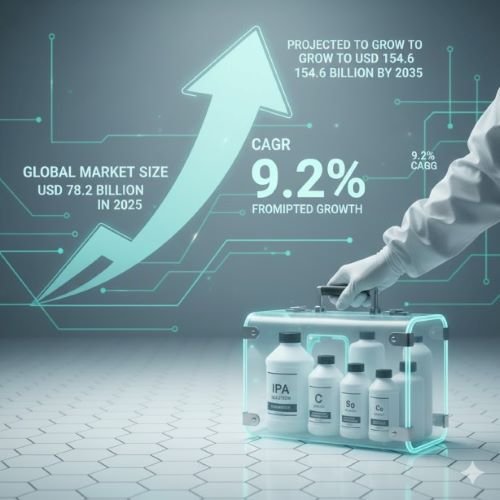
The global market is projected to grow from $78.2 billion in 2025 to $154.6 billion by 2035.
Size, byProduct, 2024 - 2032{USD Billion} The global market is projected to grow from $78.2 billion in 2025 to $154.6 billion by 2035. request a free sample copy
Global Anti-Aging Cosmetics Market Forecast (2025–2035): Beauty Innovation in the Age of Science and Sustainability
Demand for bio-based anti-aging formulations, hybrid wellness-cosmetic products, and gender-inclusive skincare is fueling this growth. Personalized skincare and AI-powered diagnostics are also influencing market direction.
Reports Description
The global anti-aging cosmetics market is evolving beyond traditional skincare. Consumers are demanding not just results—but clean ingredients, science-backed formulations, and sustainable packaging. This report explores the innovations and consumer behaviors shaping the next decade of beauty, mapping the landscape from 2025 to 2035 across regions and product types.
Market Significant Growth Factors
-
Increased life expectancy and aging global population
-
Surge in self-care and wellness spending
-
Scientific advancements in peptides, collagen, and bioactives
-
Clean beauty movement demanding toxin-free formulations
-
Social media and celebrity brand influence
Report Scope
|
Parameter |
Details |
|
Forecast Period |
2025–2035 |
|
Base Year |
2024 |
|
Market Segments |
Product Type, End-use, Channel, Region |
|
Coverage Regions |
North America, Europe, Asia-Pacific, Latin America, MEA |
|
Focus Categories |
Skincare, Serums, Creams, SPF, Organic |
|
Distribution Channels |
DTC, Retail, Dermatology Clinics |
|
Delivery Format |
PDF, Data Dashboard, Strategic Toolkit |
Report Coverage & Deliverables
-
Global forecasts across product categories and regions
-
Technological and scientific innovation insights
-
Regulatory landscape review for ingredient compliance
-
Consumer demographic shifts and behavior analysis
-
Strategic profiling of market leaders and disruptors
U.S. Market Trends
The U.S. is witnessing increased demand for clinical-grade anti-aging solutions available over-the-counter. Personalized subscription skincare models are gaining strong consumer traction.
Europe Trends
Driven by demand for organic, certified, and fragrance-free options, Europe remains at the forefront of regulatory innovation and anti-aging science integration.
Germany Trends
Germany’s pharma-cosmetic convergence is yielding advanced anti-aging serums, with dermocosmetic brands thriving due to dermatological trust.
Asia Pacific Trends
K-beauty and J-beauty trends dominate, blending holistic routines with high-tech ingredients. The region is also pioneering gender-neutral anti-aging lines and SPF-infused anti-wrinkle solutions.
China Trends
China’s consumer base is rapidly shifting toward luxury, results-oriented cosmetics. Influencer-led product launches and TCM-inspired anti-aging ranges are reshaping the market.
Recent Developments
-
Launch of AI skin assessment apps by beauty brands
-
Innovations in probiotic anti-aging formulations
-
Brand partnerships with dermatologists and biotech labs
-
Shift to refillable and plastic-free packaging solutions
Regional Insights
North America and Europe are leaders in clinical and clean-label product development, while Asia-Pacific drives consumer-centric innovation and digital skincare personalization.
Regional Market Size Table (USD Billion)
Global MarketUSD 78.2 billion (2025) → USD 154.6 billion (2035)
CAGR (2025–2035)~7.0%
| Region | 2025 Market Size (USD Bn) | 2035 Market Size (USD Bn) | CAGR (2025–2035) |
|---|---|---|---|
| Asia Pacific | 27.37 | 54.11 | 7.0% |
| North America | 21.90 | 43.29 | 7.0% |
| Europe | 19.55 | 38.65 | 7.0% |
| Latin America | 5.47 | 10.82 | 7.0% |
| Middle East & Africa | 3.91 | 7.73 | 7.0% |
| Total Global Market | 78.20 | 154.60 | 7.0% |
End-use Insights
-
Women (40+)Seeking hydration, firmness, and wrinkle reduction
-
Men’s GroomingFast-growing interest in anti-aging serums and moisturizers
-
Luxury SegmentInvesting in exclusive bio-active skincare lines
-
Middle MarketTargeting value-for-performance offerings
Deployment Insights
-
Direct-to-Consumer (DTC)Brands using online channels and influencers for rapid scaling
-
Retail & Salon PartnershipsPremium distribution through dermatologists and spas
Process Insights
-
Cold Emulsification & EncapsulationPreserving actives like retinol and peptides
-
Green Chemistry & FermentationFor natural yet potent anti-aging effects
-
AI Formulation & 3D Skin MappingPersonalized solutions powered by tech
Offerings Insight
-
Anti-Wrinkle Creams & Serums
-
Eye & Neck Treatments
-
SPF-Infused Moisturizers
-
Bioactive Face Masks
-
Collagen-Boosting Elixirs
Key Players
-
Estée Lauder Companies
-
Procter & Gamble
-
Shiseido
-
Johnson & Johnson
-
Beiersdorf AG
-
Amorepacific Corporation
-
Coty Inc.
Market Segmentation
By Product TypeSerums, Creams, Lotions, Masks, SPF-based Anti-aging
By End-useWomen, Men, Luxury Segment, Mid-tier Segment
By Distribution ChannelOnline (DTC), Retail Stores, Clinics & Salons
By RegionNorth America, Europe, Asia-Pacific, Latin America, Middle East & Africa