
Claim a Free Sample
Get a preview with key statistics, projections, and trends for this report. Ideal for quick insights.
Send Me a SampleNeed full access?
Purchase ReportEurope Energy Drinks Market Size & Trends
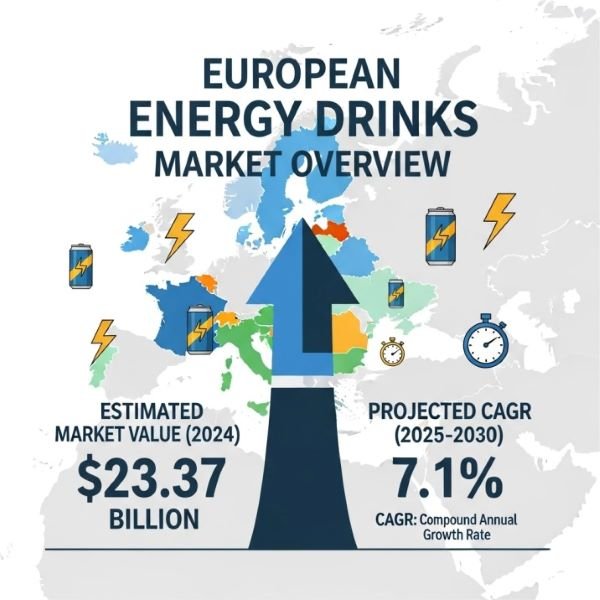
From 2025 to 2030, the energy drinks market in Europe is expected to grow at a CAGR of 7.1%, with an estimated value of 23.37 billion US dollars in 2024. Increased consumer lifestyles and health trends have led to a surge in demand for energy drinks with functional benefits beyond energy boosts, such as sugar-free, natural, and organic formulations. Large retailers in Germany, such as Edeka and Lidl, have expanded their portfolios to include healthier energy drink options, reflecting the shift. This trend is supported by consumers' desire for products that improve alertness and stamina while matching their fitness and dietary preferences.Size, byProduct, 2024 - 2030{USD Billion} Europe energy drinks market size is expected to grow at a CAGR of 7.1% From 2025 to 2030. request a free sample copy
Europe Energy Drinks Market Analysis Trends & Forecast
The spread of sports and fitness culture across Europe is another important factor contributing to the expansion of the market. The increasing number of people who participate in fitness programs, outdoor sports, and gym activities has led to a strong demand for energy drinks that help people recover and improve their performance. For example, Turkey's growing sports culture has driven a vibrant energy drinks market, with a forecast annual growth rate of 9% from 2024–2029. More than 13.5 million adults in the country are actively engaged in sports. This is a sign of a broader trend in Europe, where energy drinks are increasingly linked to active lifestyles and athletic achievement, which is supported by sponsorships and endorsements in sports events.
Furthermore, the rapid urbanization and busy lifestyles in Europe have increased the demand for convenient energy solutions on-the- go. An example of this is the partnership between FreshDirect and De Beers, which is a result of the growth of e-commerce and quick-delivery services, which has increased the accessibility of energy drinks for busy professionals and students. These products are available through various distribution channels, including supermarkets, convenience stores, vending machines, and, of course, online platforms.
A study published in 2022 by the Catholic University of Portugal found that more than 70% of the sample group of 300 people who lived in Germany drank energy drinks regularly. Most regular drinkers were young adults, and the top three motivations for consumption were taste, refreshment, and enhancing concentration.
Product Insights
The energy drinks segment accounted for a revenue share of 93.7% of the European market in 2024. Consumers seek convenient products that provide quick energy boosts and enhanced cognitive performance, fueling high consumption rates. Innovation in healthier formulations, such as sugar-free, natural ingredient blends, and added functional benefits like vitamins and electrolytes, broadened appeal beyond traditional users. For instance, the launch of vitamin-enriched and low-calorie variants by several brands has attracted health-conscious buyers. Extensive distribution through supermarkets, convenience stores, and rapidly growing e-commerce platforms ensures easy accessibility across Europe. Aggressive marketing, including sports sponsorships and digital campaigns, further drives brand loyalty and visibility.
The energy shots market is projected to grow at a CAGR of 0.6% from 2025 to 2030. Energy shots appeal to consumers seeking concentrated, portable energy boosts, especially those with busy lifestyles. The dominance of a few key players like 5-hour ENERGY has led to stagnation in innovation and competition within the category. In addition, energy shots are marketed primarily as functional energy sources rather than lifestyle beverages, reducing their appeal among younger consumers who favor flavored, multipurpose drinks. Alternative formats, including sugar-free and natural ingredient energy drinks, also divert consumer interest. These factors collectively contribute to the slow growth rate forecast for energy shots over the coming years.
Report Coverage & Deliverables
The PDF report & online dashboard will help you understand
- Competitive benchmarking
- Historical data & forecasts
- Company revenue shares
- Regional opportunities
- Latest trends & dynamics
Type Insights
The conventional energy drinks market accounted for 92.0% of Europe's revenue in 2024 due to its strong consumer loyalty and widespread availability across diverse retail channels. Traditional formulations are favored for their proven effectiveness in delivering quick energy boosts and enhanced mental and physical performance, especially among young adults and working professionals. Continuous innovation in flavors and sugar-reduced variants has helped maintain consumer interest while addressing health concerns. For instance, brands introducing new flavors like watermelon and mango have successfully attracted evolving tastes. In addition, extensive marketing efforts, including sports sponsorships and digital campaigns, have reinforced brand recognition and preference. The well-established distribution networks in supermarkets, convenience stores, and e-commerce platforms ensure easy product accessibility, further driving sales.
The organic energy drinks market is projected to grow at a CAGR of 9.8% from 2025 to 2030, primarily due to increasing consumer preference for healthier and natural alternatives amid rising health consciousness in Europe. Consumers are shifting away from synthetic ingredients and high-sugar formulations, seeking beverages made with organic fruit juices, botanical extracts, and natural sweeteners such as stevia that provide energy along with additional health benefits such as antioxidants and vitamins. For instance, brands incorporating guarana, green tea, and natural caffeine have gained traction among wellness-focused buyers. The willingness of consumers, especially in markets like Germany and the UK, to pay premium prices for organic products further fuels growth. In addition, expanding distribution through supermarkets, convenience stores, and e-commerce platforms enhances accessibility.
Packaging Insights
Canned energy drinks accounted for a share of 90.5% of the European market in 2024. Metal cans offer superior portability and convenience, fitting perfectly with the on-the-go lifestyles of European consumers, especially urban youth and working professionals. Their excellent temperature retention ensures a refreshing experience, which is highly valued in outdoor and social settings. In addition, cans provide effective protection against light and oxygen, preserving the quality and shelf life of energy drinks. The widespread availability of canned energy drinks across supermarkets, convenience stores, and growing e-commerce platforms enhances accessibility.
The bottled energy drink segment is projected to grow at a CAGR of 4.2% from 2025 to 2030 due to increasing consumer demand for convenient, resealable, and sustainable packaging options in Europe. PET bottles, in particular, offer lightweight portability and resealability, making them ideal for on-the-go consumption and multiple-use occasions, which appeals to busy urban consumers and fitness enthusiasts. The transparency of PET bottles allows consumers to see the product, which enhances purchasing confidence. In addition, manufacturers are adopting recycled PET (rPET) and eco-friendly production processes to address growing environmental concerns and comply with EU sustainability regulations. For instance, brands are launching sugar-free and natural energy drinks in recyclable PET bottles to attract health-conscious buyers.
Distribution Channel Insights
The sales of energy drinks through off-trade accounted for a share of around 85.4% of the European market in 2024. Supermarkets, hypermarkets, convenience stores, and online retailers dominate this segment, providing a wide range of energy drink options, including traditional, sugar-free, and natural variants. These retail formats benefit from large customer bases, competitive pricing, and promotional activities that attract health-conscious and active consumers. For instance, major European chains such as Lidl and Carrefour offer tailored loyalty programs and prominently display energy drinks, enhancing visibility and impulse purchases. The ability for consumers to inspect product quality, ingredients, and packaging before buying further strengthens off-trade sales. In addition, the rapid growth of e-commerce platforms supports easy access and home delivery, especially in countries with high internet penetration like Germany and the UK. These factors collectively make off-trade the preferred and dominant distribution channel for energy drinks across Europe.
Energy drink sales through on-trade are projected to grow at a CAGR of 7.4% from 2025 to 2030 due to increasing social and lifestyle trends that encourage consumption in bars, clubs, restaurants, and cafes. Urbanization and rising disposable incomes have led to more frequent dining out and nightlife participation, where energy drinks are popular as standalone beverages and cocktail mixers. For instance, energy drinks mixed with spirits are gaining traction in nightlife hubs such as London and Berlin, boosting on-trade sales. In addition, the growing sports and fitness culture encourages consumption in gyms and sports venues, where consumers seek quick energy and enhanced focus. Marketing efforts, including sponsorships of sports teams and music events, enhance brand visibility in on-trade venues. The expansion of premium and sugar-free energy drink options also attracts health-conscious consumers in social settings. These factors, combined with a youthful demographic and evolving consumer habits, underpin the steady growth of on-trade energy drink sales.
Country Insights
Germany Energy Drinks Market Trends
The energy drinks market in Germany accounted for a share of 15.1% of the regional revenue in 2024. Energy drinks have gained popularity among college students, young adults, and teenagers in Germany due to the availability of diverse flavors and types, reflecting a shift toward functional beverages over traditional carbonated drinks. Moreover, energy drinks are gaining popularity in the market due to their unique and refreshing taste. Most regular drinkers were young adults, and the top three motivations for consumption were taste, refreshment, and enhancing concentration.
UK Energy Drinks Market Trends
The UK energy drinks market is projected to grow at a CAGR of 6.2% from 2025 to 2030. The rise of e-commerce platforms and online shopping has provided energy drink brands with opportunities for growth in the UK market. The country had one of the largest e-commerce markets across the globe, and beverages are one of the top product categories in terms of demand. Brands operating in the UK leverage e-commerce channels to sell directly to consumers, bypassing traditional retail intermediaries and gaining greater control over pricing, promotions, and customer relationships. Direct-to-consumer sales have enabled brands to reach geographically dispersed consumers, personalize marketing efforts, and gather valuable data insights for product development and marketing strategies, driving growth and innovation in the energy drinks market. In addition, brands are utilizing e-commerce companies such as Amazon and Tesco to expand their reach by leveraging their market goodwill and geographical presence.
Key Europe Energy Drinks Company Insights
Key companies in the European energy drink market maintain a competitive edge by focusing on continuous product innovation, including the development of sugar-free, natural, and functional beverages enriched with vitamins and herbal extracts to meet evolving consumer health preferences. They leverage extensive and efficient distribution networks spanning supermarkets, convenience stores, and e-commerce platforms to ensure broad market penetration. Strategic partnerships with sports, entertainment, and lifestyle events enhance brand visibility and consumer engagement.
| Year | Market Size (USD Billion) | CAGR (2025–2030) |
|---|---|---|
| 2024 | 23.37 | - |
| 2025 | 25.03 | 7.1% |
| 2026 | 26.81 | 7.1% |
| 2027 | 28.72 | 7.1% |
| 2028 | 30.76 | 7.1% |
| 2029 | 32.94 | 7.1% |
| 2030 | 35.20 | 7.1% |
The Europe energy drinks market was valued at USD 23.37 billion in 2024 and is projected to expand steadily at a CAGR of 7.1% between 2025 and 2030. By the end of 2030, the market is expected to reach approximately USD 35.2 billion.
This growth is fueled by changing consumer lifestyles, rising fitness consciousness, and a preference for functional beverages. Increasingly, consumers are shifting toward sugar-free, natural, and organic energy drinks as they align with health and dietary preferences. Retail giants like Edeka and Lidl in Germany have broadened their energy drink portfolios to include healthier alternatives, reflecting this market transition.
The rising demand is primarily driven by
-
Younger demographics and active professionals seeking mental alertness and physical stamina.
-
Fitness and wellness trends influencing beverage choices.
-
Product innovation from manufacturers introducing cleaner-label, plant-based, and low-calorie formulations.
By country, Germany, the UK, and France represent the largest contributors to market demand, while Eastern European nations are rapidly emerging due to urbanization and increasing disposable incomes.
Key European Energy Drink Companies
- Red Bull GmbH
- PepsiCo, Inc.
- Monster Beverage Corporation
- Suntory Holdings Limited
- The Coca-Cola Company
- Amway Corp
- Keurig Dr. Pepper, Inc
- Lucozade Ribena Suntory Limited
- Vitamin Well AB
- Congo Brands
Recent Developments
-
In February 2024, Red Bull GmbH launched its Summer Edition Curuba Elderflower drink in a 250 ml can. This flavor, featuring a mix of curuba and elderflower, was made in multiple formats, including sugar-free options. The brand expanded its customer base by 50% with its 'Editions' range and introduced an 8x250ml mixed sugar-free multipack to meet growing demand.
Europe Energy Drinks Market Report Scope
|
Report Attribute |
Details |
|
Market size value in 2025 |
USD 24.88 billion |
|
Revenue forecast in 2030 |
USD 34.98 billion |
|
Growth rate |
CAGR of 7.1% from 2025 to 2030 |
|
Actual data |
2018-2024 |
|
Forecast period |
2025-2030 |
|
Quantitative units |
Revenue in USD million/billion CAGR from 2025 to 2030 |
|
Report coverage |
Revenue forecast, company ranking, competitive landscape, growth factors, and trends |
|
Segments covered |
Product, type, packaging, distribution channel, country |
|
Country scope |
Germany, UK, France, Italy, Spain |
|
Key companies profiled |
Red Bull GmbH; PepsiCo, Inc.; Monster Beverage Corporation; Suntory Holdings Limited; The Coca-Cola Company; Amway Corp; Keurig Dr. Pepper, Inc; Lucozade Ribena Suntory Limited; Vitamin Well AB; Congo Brands |
|
Customization scope |
Free report customization (equivalent to up to 8 analysts’ working days) with purchase. You can include or modify the scope of the country, region, and segment. |
|
Pricing and purchase options |
Avail yourself of customized purchase options to meet your exact research needs. Explore purchase options. |
Europe Energy Drinks Market Report Segmentation
This report forecasts revenue growth at the country level and provides an analysis of the latest industry trends in each of the subsegments from 2018 to 2030. For this study, MIR has segmented the Europe energy drinks market report based on product, type, packaging, distribution channel, and country
- Product Outlook (Revenue, USD Million, 2018-2030)
-
Energy Drinks
-
Energy Shots
-
- Type Outlook (Revenue, USD Million, 2018-2030)
-
Organic
-
Conventional
-
- Packaging Outlook (Revenue, USD Million, 2018-2030)
-
Bottles
-
Cans
-
Others
-
- Distribution Channel Outlook (Revenue, USD Million, 2018-2030)
-
On-Trade
-
Off-Trade
-
- Country Outlook (Revenue, USD Million, 2018-2030)
-
Germany
-
UK
-
France
-
Italy
-
Spain
-
Frequently Asked Questions
The growing demand for energy drinks as a potential energy booster in order to improve physical and cognitive performance has been shaping the market growth. Market players are aggressively marketing energy drinks as functional beverages that uplift energy and alertness as well as provide a physical boost.
The global energy drinks market size was estimated at USD 79.39 billion in 2024 and is expected to reach USD 85.25 billion in 2025.
The global energy drinks market is expected to grow at a compounded growth rate of 8.0% from 2025 to 2030 to reach USD 125.11 billion by 2030.
The energy drinks market accounted for a share of 86.8% of the global revenue in 2024. Energy drinks provide an immediate increase in energy and alertness due to ingredients such as caffeine, taurine, B vitamins, and various stimulants.
Key factors that are driving the market growth include the increasing popularity among fitness enthusiasts and athletes due to their ability to provide a quick energy boost. These beverages are formulated with ingredients such as caffeine, taurine, B vitamins, and amino acids that enhance physical performance and mental alertness.