
China Food For Special Medical Purpose Market

China Food For Special Medical Purpose Market Size, Share & Trends Analysis Report By Route Of Administration (Oral, Enteral), By Product (Pills, Powder, Liquid), By Application, By Modules, By Sales Channel, And Segment Forecasts

Published Date: October - 2025 | Publisher: MIR | No of Pages: 250 | Industry: healthcare | Format: Report available in PDF / Excel Format

View Details Download Free Sample Ask for Discount Request Customization
Claim a Free Sample

Get a preview with key statistics, projections, and trends for this report. Ideal for quick insights.

Send Me a Sample

Need full access?

Purchase Report

Market Size & Trends

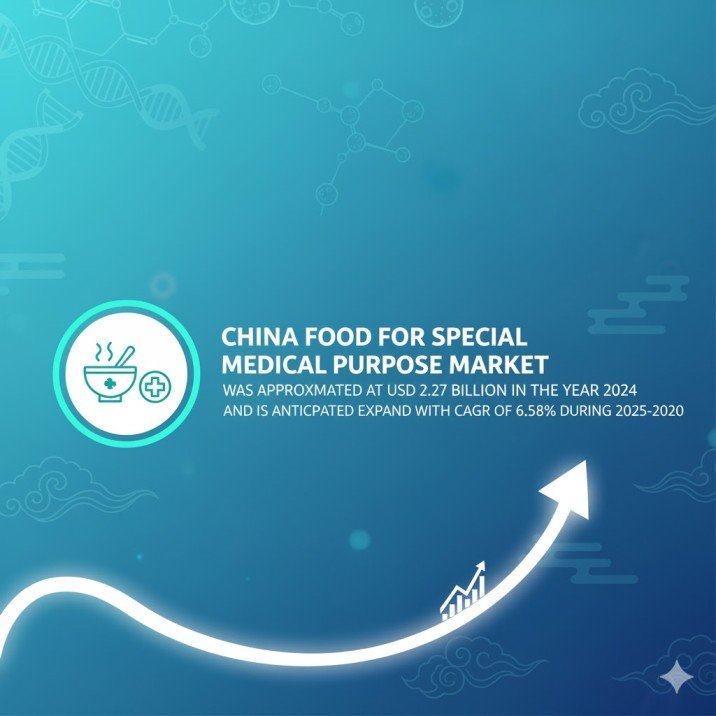
The size of the China food for special medical purpose market was approximated at USD 2.27 billion in the year 2024 and is anticipated to expand with a CAGR of 6.58% during 2025-2030.

MIR Logo

China Food For Special Medical Purpose Market

Size, byProduct, 2024 - 2032{USD Billion}

CAGR: 6.58%

China food for special medical purpose market is anticipated to expand with a CAGR of 6.58% during 2025-2030. request a free sample copy

The growth results from the aging population, enhanced rates of chronic diseases, growing malnutrition, and favorable regulatory environments. These drivers account for the growing demand for medical nutritional products designed to address the special needs of diverse patient groups. For example, in July 2022, Nestlé launched China's first food for special medical purpose (FSMP) that is designed specifically for patients with tumour-related diseases, after a five-year approval process by Chinese regulatory bodies.

Increased incidence of chronic diseases like hypertension, diabetes, and cancer is a major force behind this trend. These diseases tend to cause associated complications like weight loss and malnutrition, making specialized nutritional treatment more necessary. FSMPs designed to treat individuals with chronic conditions alleviate symptoms, enhance quality of life, and lower healthcare expenditures related to malnutrition and its complications.
The Chinese government sustained the regulation of Foods for Special Medical Purposes (FSMPs) with increasing calls for reimbursement coverage in the future. Regulatory control of FSMPs is ensured by the National Medical Products Administration (NMPA), previously the China Food and Drug Administration (CFDA), to ensure product approval and market development. By September 2024, there were a total of 206 registered FSMPs in China, of which 174 are locally produced and 32 are imported, the local products largely dominating the imported ones. Among the approved FSMPs, 153 are in powdered form, and the rest, 53, are in liquid form.

The COVID-19 pandemic had a significant influence on China's FSMP market as it propelled the growth of clinical nutrition products with higher health awareness and medical demands. In the pandemic, the emphasis on care for patients with high-risk groups, for instance, patients with chronic conditions or weakened immunity, increased dependence on specialist nutritional care to facilitate recovery and enhance health outcomes. Various industries went through economic slumps and cautious consumer spending, and healthcare and nutrition industries, such as FSMP, experienced increased interest because of the essential function in disease prevention and management. Moreover, the pandemic accelerated digitalization and modernization in the healthcare system of China, enabling improved distribution, remote consultation, and visibility of FSMP products. The challenges, including supply chain disruption and regulatory adaptation, impacted market dynamics. Overall, COVID-19 accelerated greater adoption of clinical nutrition in China and paved the way for long-term growth in the FSMP market as part of China's overall healthcare recovery and modernization initiative.
China Food For Special Medical Purpose Market 1

Market Concentration & Characteristics

China's FSMP market demonstrated a high level of innovation fueled by the demand to address various clinical nutrition needs and ensure compliance with changing regulatory requirements. For example, during October 2024, 14 new FSMP products were cleared in the third quarter alone, such as new complete nutrition formula items and electrolyte items, demonstrating continuous product variety and function innovation. The drive for ready-to-drink and infant FSMPs points to innovation for responding to market needs and clinical evidence.

The market demonstrates a medium level of M&A activity, with domestic players attempting to enhance their portfolios and domestic manufacturing capabilities. M&A transactions are less common compared to innovation-led product launches, collaborations, and joint ventures, which are prevalent to circumvent the intricate regulatory environment and speed up market entrance.

The regulatory influence on the China FSMP market is high and pivotal in determining market dynamics. In December 2023, China's State Administration for Market Regulation (SAMR) exercised a significant regulatory overhaul in the form of the just-introduced Measures for the Administration of the Registration of Formula Foods for Special Medical Purposes (referred to as the 'revised measures'), in place of the 2016 version of the Administrative Measures for FSMP registration. These regulation changes mandate firms to spend heavily on R&D, compliance testing, and packaging redesigns, having a substantial impact on product development lifecycles and market access strategies. Product substitution within the China FSMP market is low, largely as a result of the specialized nature of FSMP products and the absence of direct substitutes.

FSMPs are designed to meet individual medical and dietary requirements under professional supervision and are thus difficult to substitute with normal food or supplements. The limited number of FSMP products available for orphan diseases and amino acid metabolic disorders made some patients dependent on imported products, thus leading to partial substitution. In September 2023, the CFSA's latest draft of Amino Acid Management, a document that defines utilizing 22 amino acids in FSMPs, aims to curb the shortage of niche products, promoting local production and lowering import reliance, lessening substitution risks. 

Report Coverage & Deliverables

  • Competitive benchmarking
  • Historical data & forecasts
  • Company revenue shares
  • Regional opportunities
  • Latest trends & dynamics

Route of Administration Insights

The oral segment was the market leader with the highest revenue share of 65.93% in 2024 and is expected to expand at the highest CAGR during the forecast period, as it is convenient, economical, and easy to administer. Oral nutrition products, including protein shakes and meal replacements, are more commonly consumed by patients with malnutrition, long-term illness, or post-operative recovery requirements. The increasing number of elderly people, coupled with improved awareness of chronic diseases such as cancer and diabetes, fuels demand for oral FSMPs. Furthermore, the need for home care solutions and easy-to-prepare products has propelled the growth of this segment and become the first choice among most consumers in China. The enteral route of administration is anticipated to see maximum growth during the forecast period.

The market for enteral feeding formulas is growing as the incidence of chronic diseases like cancer and cardiovascular diseases is on the rise, which leads to different metabolic disorders, thus making it challenging for the patient to eat during the course of such diseases. In critically ill patients, nutrition should be supplied to avert worsening of undernutrition and loss of lean body mass because patients are in a catabolic state owing to the system's inflammatory response. 

Product Insights

The powder segment was the largest revenue share holder in 2024.
Medical foods are most commonly found in the form of powder that can be given orally or by the enteral route by taking it with milk or water, as prescribed by the doctor. Medical foods in powdered formula are used for patients of all ages, particularly in the oral route. Due to a strong preference for powder forms due to convenience of consumption, companies are creating product lines according to consumer preference. For example, in January 2022, Danone introduced Souvenaid, a powder form of a medical nutrition beverage to aid memory in the early phases of Alzheimer's disease.

The liquid segment is anticipated to expand at the highest CAGR during the forecast period. Liquid formulations are embraced by patients who are clinically diagnosed with dysphagia or when oral physiology is compromised. Moreover, these formulations are strongly embraced by pediatric and geriatric populations when the consumption of solid formulations is restricted or not possible. The growing commercial viability of these products and increasing adoption as a result of ease of administration are fuelling segment growth. In addition, physicians prescribe the consumption of liquid-formulated food to patients who have functional gastrointestinal disorders, and an increase in the number of such patients is driving segment growth. Also, liquid-formulated food supports adequate hydration and electrolyte balance, supporting segment growth.

Application Insights

Cancer use had the highest revenue share in the market in 2024. Based on the National Centre for Biotechnology Information (NCBI) 2024 estimated figures, China is expected to register around 3.25 million new cancer cases among men and 2.51 million among women. Cancer compromises immunity and results in lower nutritional levels in 40% to 80% of cases. Therefore, medical food administration proves to be a viable solution for the restoration of nutritional equilibrium in malnourished patients. Thus, the requirement for medical foods in cancer therapy will rise during the forecast period.

The cachexia market is expected to expand during the forecast period, fueled by increasing incidence of cancer and other chronic illnesses. Cachexia, defined as severe weight loss and wasting of body tissue, occurs in a high percentage of cancer patients and results in higher mortality and poorer quality of life. The increasing awareness of cachexia's influence on patient outcome is propelling the demand for tailored nutritional therapies in China.

Modules Insights

Protein module had a largest revenue share in 2024 due to the growing incidence of malnutrition, sarcopenia, and chronic diseases in the geriatric population. With reduced levels of dietary protein consumption among elderly people, specialized protein-based FSMPs are needed to preserve muscle mass, immune function, and overall health. As per a researcher with the Chinese Center for Disease Control and Prevention (CDC), firms can make use of further protein fortification in developing new Foods for Special Medical Purposes (FSMP) for the elderly due to the reduction in their protein consumption. Such innovations are made for use in hospitals as well as in home care patients, meeting particular nutritional requirements and improving patient results. Hypoallergenic module is the most rapidly growing segment, fueled by increasing rates of food allergies, especially in infants.

Cow's milk allergy prevalence in Chinese children was estimated at 1.5% (95% CI1.0%-2.3%) based on the meta-analysis in 2022. The prevalence of food allergy in Chinese children was 6.2% (95% CI5.1%-7.5%). As a response, manufacturers created extensively hydrolyzed formulas (eHFs) to minimize allergenicity. For example, Althéra and Alfaré, both developed by Nestlé Health Science, are lactose-free and contain lactose eHFs designed to cater to Chinese infants with CMPA's nutritional requirements. This is evidence of the industry's dedication to meeting certain dietary requirements, propelling the market's growth and competition. 

🇨🇳 China FSMP Market Size by Region (2024–2030)

Region2024 Market Size (USD Billion)CAGR (2025–2030)2030 Market Size (USD Billion)Key Growth Drivers
China (Total)2.276.58%3.33Aging population, rising chronic disease prevalence, supportive regulatory framework.
East China (e.g. Shanghai, Jiangsu, Zhejiang)0.856.58%1.25Largest medical hubs, high healthcare infrastructure, major FSMP production base.
South China (e.g. Guangdong, Fujian)0.506.58%0.73Urbanization, increasing consumer awareness, and growing elderly population.
North China (e.g. Beijing, Tianjin)0.406.58%0.59High demand in urban centers, government-supported healthcare initiatives.
Central China (e.g. Hubei, Hunan)0.256.58%0.37Expanding access to clinical nutrition products and hospital-based FSMP use.
West & Northwest China (e.g. Sichuan, Shaanxi)0.176.58%0.25Emerging markets, government push for regional healthcare development.
Northeast China (e.g. Liaoning, Heilongjiang)0.106.58%0.15Aging population, increased demand for disease-specific nutritional products.

Sales Channel Insights

Direct-to-consumer (DTC) sales channels captured the largest market share in 2024 and are anticipated to expand at the highest CAGR over the forecast period. DTC sales proved to be a key channel in the medical foods market, offering ways for manufacturers to connect with consumers directly and customize their products to suit particular health requirements. DTC sales in the medical foods industry enable firms to avoid conventional retail outlets and form a direct relationship with final consumers. The model expanded based on its capacity to deliver customized consumer experiences and brand loyalty. Using the internet, firms provide extensive product information, educational content, and customized advice depending on specific medical conditions.

Institutional sales are projected to increase exponentially during the forecast period. The growth in the segment is fueled by rising recommendations by physicians to utilize medical foods. Hospitals, long-term care facilities, hospices, clinics, and centers for the disabled are some of the institutions that buy medical foods. With medical consumption advised under medical supervision, institutional revenues are highest. Moreover, training programs for healthcare professionals about the advantages of medical foods drive their usage in institutions. As word spreads among clinicians regarding the effectiveness of these products in enhancing patient outcomes, institutional sales are likely to see dramatic growth.

Key China Food for Special Medical Purpose Companies Insights

Key players operating in the China food for special medical purpose (FSMP) market are undertaking various initiatives to strengthen their presence and increase the reach of their products and services. Strategies such as expansion activities and partnerships are key in propelling the market growth.

Key China Food for Special Medical Purpose Companies

  • Danone (Nutricia)
  • Nestlé
  • Abbott
  • Fresenius Kabi AG
  • Mead Johnson (Reckitt Benckiser)
  • Maifu Nutrition technology
  • Jiangsu Hengrui Pharmaceuticals Co., Ltd.
  • H&H Group (Biostime)
  • Synutra, Inc.
  • Beingmate global
  • Taicang Puyuan Pharmaceutical Co.
  • Jiangsu Chia Tai Fenghai Pharmaceutical Co., Ltd.
  • Ainuo Instrument Co., Ltd.
  • Kunyu Health Pharmaceutical Jiangsu Co., Ltd.
  • Shijiazhuang Junlebao Taixing Dairy Co., Ltd.
  • Jiangsu Dongze Special Medical Food Co., Ltd.
  • Heilongjiang Feihe Dairy Co., Ltd.

China Food For Special Medical Purpose (FSMP) Market Report Scope

Report Attribute

Details

Revenue Forecast in 2025

USD 2.42 billion

Revenue Forecast in 2030

USD 3.33 billion

Growth rate

CAGR of 6.58% from 2025 to 2030

Actual data

2018 - 2024

Forecast period

2025 - 2030

Quantitative units

Revenue in USD million/billion and CAGR from 2025 to 2030

Report coverage

Revenue forecast, company ranking, competitive landscape, growth factors, and trends

Segments covered

Route of administration, product, application, modules, sales channel

Key companies profiled

Nutricia (Danone); Nestlé; Abbott; Fresenius Kabi AG; Mead Johnson (Reckitt Benckiser); Maifu Nutrition technology; Jiangsu Hengrui Pharmaceuticals Co., Ltd.; H&H Group (Biostime); Synutra, Inc.; Beingmate global; Taicang Puyuan Pharmaceutical Co.; Jiangsu Chia Tai Fenghai Pharmaceutical Co., Ltd.; Ainuo Instrument Co., Ltd.; Kunyu Health Pharmaceutical Jiangsu Co., Ltd.; Shijiazhuang Junlebao Taixing Dairy Co., Ltd.; Jiangsu Dongze Special Medical Food Co., Ltd.; Heilongjiang Feihe Dairy Co., Ltd. Feihe Dairy Co., Ltd.

Customization scope

Free report customization (equivalent to up to 8 analyst’s working days) with purchase. Addition or alteration to country & segment scope.

Pricing and purchase options

Avail customized purchase options to meet your exact research needs. Explore purchase options

China Food For Special Medical Purpose Market Report Segmentation

This report forecasts revenue growth at the country level and provides an analysis of the latest industry trends in each of the sub-segments from 2018 to 2030. For this study, MIR has segmented the China food for special medical purpose (FSMP) market report based on route of administration, product, application, modules, and sales channel.

  • Route of Administration Outlook (Revenue, USD Million, 2018 - 2030)

    • Oral

    • Enteral

  • Product Outlook (Revenue, USD Million, 2018 - 2030)

    • Pills

    • Powder

    • Liquid

    • Others (semisolid, semiliquid)

  • Application Outlook (Revenue, USD Million, 2018 - 2030)

    • Chronic Kidney Disease

    • Minimal Hepatic Encephalopathy

    • Chemotherapy Induced Diarrhea

    • Pathogen Related Infections

    • Diabetic Neuropathy

    • ADHD

    • Depression

    • Alzheimer's Disease

    • Nutritional Deficiency

    • Orphan Diseases

      • Tyrosinemia

      • Eosinophilic Esophagitis

      • Food Protein Module-induced enterocolitis syndrome (Food Protein Module-induced enterocolitis syndrome (FPIES))

      • Phenylketonuria (PKU)

      • Maple syrup urine disease (Maple syrup urine disease (MSUD))

      • Homocystinuria

      • Others (Urea Cycle Disorder (UCD), Glycogen Storage Disease (GSD), etc.)

    • Wound Healing

    • Chronic Diarrhea

    • Constipation Relief

    • Protein Booster

    • Dysphagia

    • Pain Management

    • Parkinson's Disease

    • Epilepsy

    • Other Cancer related treatments

    • Severe Protein Allergy

    • Cancer

    • Cachexia

    • Other (debilitating conditions, COPD, etc.)

  • Modules Outlook (Revenue, USD Million, 2018 - 2030)

    • Amino Acid Module

    • Protein Module

    • Vitamin & Mineral Modules

    • Fatty Acid based Modules

    • Carbohydrate Modules

    • Fiber Modules

    • Ketogenic Modules

    • Peptide based Modules

    • Hypoallergic Modules

    • Others (Electrolyte Module, etc.)

  • Sales Channel Outlook (Revenue, USD Million, 2018 - 2030)

    • DTC Sales Channel

      • Online Sales

      • Retail Sales

    • Institutional Sales

      • Hospitals

      • Others (Long-term Care Facilities, etc.)

Table of Content

Table of Contents

Chapter 1. Methodology and Scope
                    1.1. Market Segmentation & Scope
                        1.1.1. Segment Definitions
                    1.2. Estimates and Forecast Timeline
                    1.3. Research Methodology
                    1.4. Information Procurement
                        1.4.1. Purchased Database
                        1.4.2. GVR’s Internal Database
                        1.4.3. Secondary Sources
                        1.4.4. Primary Research
                        1.4.5. Details of Primary Research
                        1.4.6. Research Assumption
                    1.5. Information or Data Analysis
                        1.5.1. Data Analysis Models
                    1.6. Market Formulation & Data Visualization
                    1.7. Model Details
                        1.7.1. Commodity Flow Analysis
                    1.8. Objectives
                        1.8.1. Objective - 1
                        1.8.2. Objective - 2
                        1.8.3. Objective - 3
                    1.9. List of Secondary Sources
                    1.10. List of Secondary Sources
Chapter 2. Executive Summary
                    2.1. China FSMP Market
                        2.1.1. Market Snapshot
                        2.1.2. Segment Snapshot
                            2.1.2.1. Route of administration segment outlook
                            2.1.2.2. Product type segment outlook
                            2.1.2.3. Application segment outlook
                            2.1.2.4. Modules segment outlook
                            2.1.2.5. Sales channel segment outlook
                        2.1.3. Competitive Landscape Snapshot
Chapter 3. Market Variables, Trends, & Scope
                    3.1. Market Lineage Outlook
                        3.1.1. Parent Market Outlook
                        3.1.2. Related/Ancillary Market Outlook
                    3.2. Market Trends and Outlook
                    3.3. Market Dynamics
                        3.3.1. Market Driver Analysis
                            3.3.1.1. Rising aging population and government-led healthcare spending surge
                            3.3.1.2. Growing consumer awareness and demand
                            3.3.1.3. Hospital-based nutrition therapy programs driving FSMP penetration
                            3.3.1.4. Regulatory priority and fast-track approval for FSMPs targeting rare diseases
                        3.3.2. Market Restraint Analysis
                            3.3.2.1. High regulatory barriers and lengthy product approval process
                            3.3.2.2. Scarcity of Specialized Products for Rare Diseases
                    3.4. Pricing analysis
                    3.5. User perspective analysis
                        3.5.1. Consumer Behavior Analysis
                    3.6. Technology outlook
                    3.7. Regulatory framework
                        3.7.1. Reimbursement framework
                        3.7.2. Standards, compliance & safety
                    3.8. Business Environment Analysis Tools
                        3.8.1. Porter’s five forces analysis
                            3.8.1.1. Competitive rivalry
                            3.8.1.2. Threat of new entrants
                            3.8.1.3. Bargaining power of buyers
                            3.8.1.4. Bargaining power of suppliers
                            3.8.1.5. Threat of substitutes
                        3.8.2. PESTEL Analysis
                            3.8.2.1. Political landscape
                            3.8.2.2. Economic and social landscape
                            3.8.2.3. Technological landscape
                            3.8.2.4. Environmental landscape
                        3.8.3. COVID 19 Impact Analysis
Chapter 4. China FSMP Market: Route of Administration Estimates & Trend Analysis
                    4.1. China FSMP Market: Route of Administration Movement Analysis
                    4.2. China FSMP Market: Route of Administration Segment Dashboard
                    4.3. Route of Administration Movement & Market Share Analysis, 2024 & 2030
                    4.4. China FSMP Market Estimates & Forecast, by Route of Administration
                    4.5. Oral
                        4.5.1. Market Estimates & Forecast, 2018 - 2030 (USD Million)
                    4.6. Enteral
                        4.6.1. Market Estimates & Forecast, 2018 - 2030 (USD Million)
Chapter 5. China FSMP Market: Product Estimates & Trend Analysis
                    5.1. China FSMP Market: Product Movement Analysis
                    5.2. China FSMP Market: Product Segment Dashboard
                    5.3. Product Type Movement & Market Share Analysis, 2024 & 2030
                    5.4. China FSMP Market Estimates & Forecast, by Product Type
                    5.5. Pills
                        5.5.1. Market Estimates & Forecast, 2018 - 2030 (USD Million)
                    5.6. Powder
                        5.6.1. Market Estimates & Forecast, 2018 - 2030 (USD Million)
                    5.7. Liquid
                        5.7.1. Market Estimates & Forecast, 2018 - 2030 (USD Million)
                    5.8. Others (semisolid, semiliquid)
                        5.8.1. Market Estimates & Forecast, 2018 - 2030 (USD Million)
Chapter 6. China FSMP Market: Application Estimates & Trend Analysis
                    6.1. China FSMP Market: Application Movement Analysis
                    6.2. China FSMP Market: Application Segment Dashboard
                    6.3. Filter Movement & Market Share Analysis, 2024 & 2030
                    6.4. China FSMP Market Estimates & Forecast, by Filter
                    6.5. Chronic Kidney Disease
                        6.5.1. Market Estimates & Forecast, 2018 - 2030 (USD Million)
                    6.6. Minimal Hepatic Encephalopathy
                        6.6.1. Market Estimates & Forecast, 2018 - 2030 (USD Million)
                    6.7. Chemotherapy Induced Diarrhea
                        6.7.1. Market Estimates & Forecast, 2018 - 2030 (USD Million)
                    6.8. Pathogen Related Infections
                        6.8.1. Market Estimates & Forecast, 2018 - 2030 (USD Million)
                    6.9. Diabetic Neuropathy
                        6.9.1. Market Estimates & Forecast, 2018 - 2030 (USD Million)
                    6.10. ADHD
                        6.10.1. Market Estimates & Forecast, 2018 - 2030 (USD Million)
                    6.11. Depression
                        6.11.1. Market Estimates & Forecast, 2018 - 2030 (USD Million)
                    6.12. Alzheimer's Disease
                        6.12.1. Market Estimates & Forecast, 2018 - 2030 (USD Million)
                    6.13. Nutritional Deficiency
                        6.13.1. Market Estimates & Forecast, 2018 - 2030 (USD Million)
                    6.14. Orphan Diseases
                        6.14.1. Market Estimates & Forecast, 2018 - 2030 (USD Million)
                        6.14.2. Tyrosinemia
                            6.14.2.1. Market Estimates & Forecast, 2018 - 2030 (USD Million)
                        6.14.3. Eosinophilic Esophagitis
                            6.14.3.1. Market Estimates & Forecast, 2018 - 2030 (USD Million)
                        6.14.4. Food Protein Module-induced enterocolitis syndrome (Food Protein Module-induced enterocolitis syndrome (FPIES))
                            6.14.4.1. Market Estimates & Forecast, 2018 - 2030 (USD Million)
                        6.14.5. Phenylketonuria (PKU)
                            6.14.5.1. Market Estimates & Forecast, 2018 - 2030 (USD Million)
                        6.14.6. Maple syrup urine disease (Maple syrup urine disease (MSUD))
                            6.14.6.1. Market Estimates & Forecast, 2018 - 2030 (USD Million)
                        6.14.7. Homocystinuria
                            6.14.7.1. Market Estimates & Forecast, 2018 - 2030 (USD Million)
                        6.14.8. Others (Urea Cycle Disorder (UCD), Glycogen Storage Disease (GSD), etc.)
                            6.14.8.1. Market Estimates & Forecast, 2018 - 2030 (USD Million)
                    6.15. Wound Healing
                        6.15.1. Market Estimates & Forecast, 2018 - 2030 (USD Million)
                    6.16. Chronic Diarrhea
                        6.16.1. Market Estimates & Forecast, 2018 - 2030 (USD Million)
                    6.17. Constipation Relief
                        6.17.1. Market Estimates & Forecast, 2018 - 2030 (USD Million)
                    6.18. Protein Booster
                        6.18.1. Market Estimates & Forecast, 2018 - 2030 (USD Million)
                    6.19. Dysphagia
                        6.19.1. Market Estimates & Forecast, 2018 - 2030 (USD Million)
                    6.20. Pain Management
                        6.20.1. Market Estimates & Forecast, 2018 - 2030 (USD Million)
                    6.21. Parkinson's Disease
                        6.21.1. Market Estimates & Forecast, 2018 - 2030 (USD Million)
                    6.22. Epilepsy
                        6.22.1. Market Estimates & Forecast, 2018 - 2030 (USD Million)
                    6.23. Other Cancer related treatments
                        6.23.1. Market Estimates & Forecast, 2018 - 2030 (USD Million)
                    6.24. Severe Protein Allergy
                        6.24.1. Market Estimates & Forecast, 2018 - 2030 (USD Million)
                    6.25. Cancer
                        6.25.1. Market Estimates & Forecast, 2018 - 2030 (USD Million)
                    6.26. Cachexia
                        6.26.1. Market Estimates & Forecast, 2018 - 2030 (USD Million)
                    6.27. Other (debilitating conditions, COPD, etc.)
                        6.27.1. Market Estimates & Forecast, 2018 - 2030 (USD Million)
Chapter 7. China FSMP Market: Modules Estimates & Trend Analysis
                    7.1. China FSMP Market: Modules Movement Analysis
                    7.2. China FSMP Market: Modules Segment Dashboard
                    7.3. Modules Movement & Market Share Analysis, 2024 & 2030
                    7.4. China FSMP Market Estimates & Forecast, by Modules
                    7.5. Amino Acid Module
                        7.5.1. Market Estimates & Forecast, 2018 - 2030 (USD Million)
                    7.6. Protein Module
                        7.6.1. Market Estimates & Forecast, 2018 - 2030 (USD Million)
                    7.7. Vitamin & Mineral Modules
                        7.7.1. Market Estimates & Forecast, 2018 - 2030 (USD Million)
                    7.8. Fatty Acid based Modules
                        7.8.1. Market Estimates & Forecast, 2018 - 2030 (USD Million)
                    7.9. Carbohydrate Modules
                        7.9.1. Market Estimates & Forecast, 2018 - 2030 (USD Million)
                    7.10. Fiber Modules
                        7.10.1. Market Estimates & Forecast, 2018 - 2030 (USD Million)
                    7.11. Ketogenic Modules
                        7.11.1. Market Estimates & Forecast, 2018 - 2030 (USD Million)
                    7.12. Peptide based Modules
                        7.12.1. Market Estimates & Forecast, 2018 - 2030 (USD Million)
                    7.13. Hypoallergic Modules
                        7.13.1. Market Estimates & Forecast, 2018 - 2030 (USD Million)
                    7.14. Others (Electrolyte Module, etc.)
                        7.14.1. Market Estimates & Forecast, 2018 - 2030 (USD Million)
Chapter 8. China FSMP Market: Sales Channel Estimates & Trend Analysis
                    8.1. China FSMP Market: Sales Channel Movement Analysis
                    8.2. China FSMP Market: Sales Channel Segment Dashboard
                    8.3. Sales Channel Movement & Market Share Analysis, 2024 & 2030
                    8.4. China FSMP Market Estimates & Forecast, by Sales Channel
                    8.5. DTC Sales Channel
                        8.5.1. Market Estimates & Forecast, 2018 - 2030 (USD Million)
                        8.5.2. Online Sales
                            8.5.2.1. Market Estimates & Forecast, 2018 - 2030 (USD Million)
                        8.5.3. Retail Sales
                            8.5.3.1. Market Estimates & Forecast, 2018 - 2030 (USD Million)
                    8.6. Institutional Sales
                        8.6.1. Market Estimates & Forecast, 2018 - 2030 (USD Million)
                        8.6.2. Hospitals
                            8.6.2.1. Market Estimates & Forecast, 2018 - 2030 (USD Million)
                        8.6.3. Others (Long-term Care Facilities, etc.)
                            8.6.3.1. Market Estimates & Forecast, 2018 - 2030 (USD Million)
Chapter 9. Competitive Landscape
                    9.1. Company Categorization
                    9.2. Company Market Position Analysis
                    9.3. Company Share Analysis
                    9.4. Company Profiles/Listing
                        9.4.1. Nutricia (Danone)
                            9.4.1.1. Overview
                            9.4.1.2. Financial performance
                            9.4.1.3. Product benchmarking
                            9.4.1.4. Strategic initiatives
                        9.4.2. Nestlé
                            9.4.2.1. Overview
                            9.4.2.2. Financial performance
                            9.4.2.3. Product benchmarking
                            9.4.2.4. Strategic initiatives
                        9.4.3. Abbott
                            9.4.3.1. Overview
                            9.4.3.2. Financial performance
                            9.4.3.3. Product benchmarking
                            9.4.3.4. Strategic initiatives
                        9.4.4. Fresenius Kabi AG
                            9.4.4.1. Overview
                            9.4.4.2. Financial performance
                            9.4.4.3. Product benchmarking
                            9.4.4.4. Strategic initiatives
                        9.4.5. Mead Johnson (Reckitt Benckiser)
                            9.4.5.1. Overview
                            9.4.5.2. Financial performance
                            9.4.5.3. Product benchmarking
                            9.4.5.4. Strategic initiatives
                        9.4.6. Maifu Nutrition technology
                            9.4.6.1. Overview
                            9.4.6.2. Financial performance
                            9.4.6.3. Product benchmarking
                            9.4.6.4. Strategic initiatives
                        9.4.7. Jiangsu Hengrui Pharmaceuticals Co., Ltd.
                            9.4.7.1. Overview
                            9.4.7.2. Financial performance
                            9.4.7.3. Product benchmarking
                            9.4.7.4. Strategic initiatives
                        9.4.8. H&H Group (Biostime)
                            9.4.8.1. Overview
                            9.4.8.2. Financial performance
                            9.4.8.3. Product benchmarking
                            9.4.8.4. Strategic initiatives
                        9.4.9. Synutra, Inc.
                            9.4.9.1. Overview
                            9.4.9.2. Financial performance
                            9.4.9.3. Product benchmarking
                            9.4.9.4. Strategic initiatives
                        9.4.10. Beingmate global
                            9.4.10.1. Overview
                            9.4.10.2. Financial performance
                            9.4.10.3. Product benchmarking
                            9.4.10.4. Strategic initiatives
                        9.4.11. Taicang Puyuan Pharmaceutical Co
                            9.4.11.1. Overview
                            9.4.11.2. Financial performance
                            9.4.11.3. Product benchmarking
                            9.4.11.4. Strategic initiatives
                        9.4.12. Jiangsu Chia Tai Fenghai Pharmaceutical Co., Ltd.
                            9.4.12.1. Overview
                            9.4.12.2. Financial performance
                            9.4.12.3. Product benchmarking
                            9.4.12.4. Strategic initiatives
                        9.4.13. Kunyu Health Pharmaceutical Jiangsu Co., Ltd.
                            9.4.13.1. Overview
                            9.4.13.2. Financial performance
                            9.4.13.3. Product benchmarking
                            9.4.13.4. Strategic initiatives
                        9.4.14. Shijiazhuang Junlebao Taixing Dairy Co., Ltd., Jiangsu
                            9.4.14.1. Overview
                            9.4.14.2. Financial performance
                            9.4.14.3. Product benchmarking
                            9.4.14.4. Strategic initiatives
                        9.4.15. Jiangsu Dongze Special Medical Food Co., Ltd.
                            9.4.15.1. Overview
                            9.4.15.2. Financial performance
                            9.4.15.3. Product benchmarking
                            9.4.15.4. Strategic initiatives
                        9.4.16. Heilongjiang Feihe Dairy Co., Ltd.
                            9.4.16.1. Overview
                            9.4.16.2. Financial performance
                            9.4.16.3. Product benchmarking
                            9.4.16.4. Strategic initiatives
                        9.4.17. Ainuo Instrument Co., Ltd.
                            9.4.17.1. Overview
                            9.4.17.2. Financial performance
                            9.4.17.3. Product benchmarking
                            9.4.17.4. Strategic initiatives

List of Tables

Table 1 List of secondary sources
Table 2 List of abbreviations
Table 3 China FSMP market revenue estimates and forecast, by route of administration, 2018 - 2030 (USD Million)
Table 4 China FSMP market revenue estimates and forecast, by product type, 2018 - 2030 (USD Million)
Table 5 China FSMP market revenue estimates and forecast, by application, 2018 - 2030 (USD Million)
Table 6 China FSMP market revenue estimates and forecast, by modules, 2018 - 2030 (USD Million)
Table 7 China FSMP market revenue estimates and forecast, by sales channel, 2018 - 2030 (USD Million)

Key China Food for Special Medical Purpose Companies:

  • Danone (Nutricia)
  • Nestlé
  • Abbott
  • Fresenius Kabi AG
  • Mead Johnson (Reckitt Benckiser)
  • Maifu Nutrition technology
  • Jiangsu Hengrui Pharmaceuticals Co., Ltd.
  • H&H Group (Biostime)
  • Synutra, Inc.
  • Beingmate global
  • Taicang Puyuan Pharmaceutical Co.
  • Jiangsu Chia Tai Fenghai Pharmaceutical Co., Ltd.
  • Ainuo Instrument Co., Ltd.
  • Kunyu Health Pharmaceutical Jiangsu Co., Ltd.
  • Shijiazhuang Junlebao Taixing Dairy Co., Ltd.
  • Jiangsu Dongze Special Medical Food Co., Ltd.
  • Heilongjiang Feihe Dairy Co., Ltd.