
Claim a Free Sample
Get a preview with key statistics, projections, and trends for this report. Ideal for quick insights.
Send Me a SampleNeed full access?
Purchase ReportMarket Size and Growth Outlook
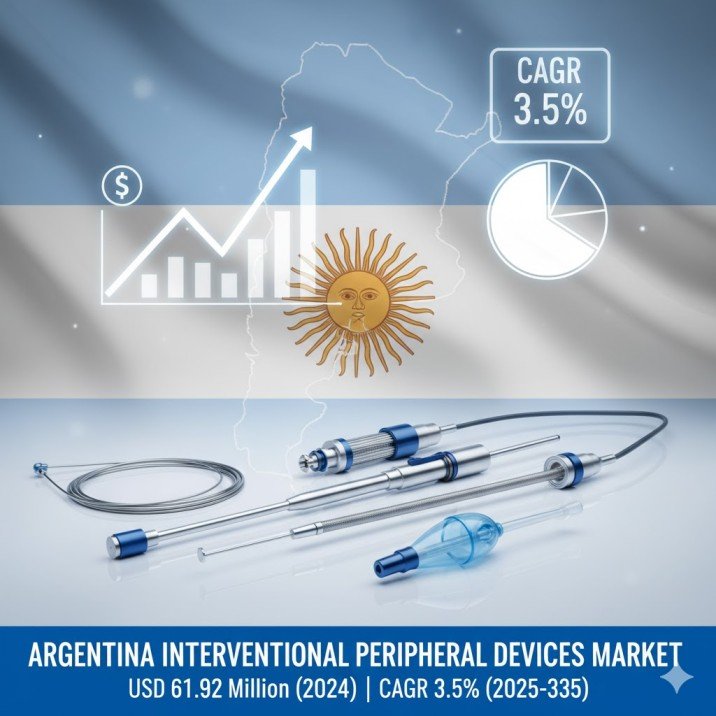
The Argentina interventional peripheral devices market was valued at USD 61.92 million in 2024 and is expected to expand at a CAGR of 3.5% from 2025 to 2035.

Argentina Interventional Peripheral Devices Market Forecast 2025 to 2035: Trends, Drivers, and Future Outlook
Size, byProduct, 2024 - 2032{USD Million}
The Argentina interventional peripheral devices market was valued at USD 61.92 million in 2024 and is expected to expand at a CAGR of 3.5% from 2025 to 2035. request a free sample copy
This growth is largely driven by the increasing incidence of Peripheral Arterial Diseases (PAD), fueled by aging demographics and rising cases of chronic conditions like diabetes and hypertension. As healthcare providers increasingly favor minimally invasive interventions, there’s a growing preference for devices such as angioplasty balloons, catheters, and stents that support faster recovery and shorter hospital stays.
Evolving Healthcare Infrastructure
Argentina's private healthcare sector continues to modernize, providing greater access to advanced technologies. Private medical institutions are investing in high-precision interventional systems to raise standards of care. Simultaneously, global medtech companies are entering the local market through collaborations and distribution agreements, improving access to high-end, internationally approved devices. This influx of innovation is supported by increased clinical training, enabling professionals to effectively deploy these advanced peripheral interventions.
Growing Demand Due to Rising PAD Cases
The prevalence of PAD is rising in Argentina, closely linked to an aging population and lifestyle risk factors such as smoking, lack of physical activity, and unmanaged diabetes. As awareness of early diagnosis and interventional treatments improves, healthcare providers are seeing an increase in procedural volumes. This growing demand underscores the importance of interventional devices that can restore arterial blood flow and enhance patient outcomes.
Report Scope
|
Parameter |
Details |
|
Study Period |
2025–2035 |
|
Base Year |
2024 |
|
Forecast Period |
2025–2035 |
|
Forecast Units |
USD Million |
|
Market Growth Rate |
CAGR of 3.5% |
|
Segments Covered |
Product Type, Application, End-User |
|
Key Regions |
Argentina (national focus with urban vs rural trends) |
|
Key Drivers |
Aging population, rising PAD prevalence, technological advancements |
|
Market Challenges |
High device costs, limited access in rural areas |
|
Growth Opportunities |
Private healthcare expansion, digital healthcare adoption, training programs |
Demographic Shift and Vascular Health Burden
Argentina’s aging population is playing a significant role in shaping market dynamics. According to the Pan American Health Organization, individuals aged 65 and older represented 12.4% of the country’s population in 2024—a significant increase from 9.6% in 2000. This demographic transformation is directly correlated with the rise in vascular conditions like PAD and deep vein thrombosis (DVT), both of which require device-based interventional treatment. As the elderly population continues to grow, so does the demand for specialized devices like thrombectomy tools, catheters, and peripheral stents.
Innovation and Technological Advancement
Technological progress is another cornerstone of the market's evolution. Innovations such as drug-eluting balloons, next-gen catheters, and bioresorbable stents offer reduced invasiveness and better clinical outcomes. These technologies have captured the attention of both practitioners and patients by offering faster recovery times and safer procedures. Their expanding presence in clinical settings is a key driver for future growth in the interventional peripheral devices segment in Argentina.
Argentina Interventional Peripheral Devices Market Size (2024–2035)
Base Year (2024)USD 61.92 Million
CAGR (2025–2035)3.5%
| Region/Province | Market Size (2024, USD Million) | Forecast CAGR (2025–2035) | Market Size (2035, USD Million) | Key Insights |
|---|---|---|---|---|
| Buenos Aires | 26.1 | 3.6% | 37.3 | Largest regional market due to advanced healthcare infrastructure, availability of interventional specialists, and concentration of tertiary hospitals. |
| Córdoba | 11.4 | 3.5% | 16.1 | Increasing adoption of minimally invasive procedures and growing presence of private healthcare providers. |
| Santa Fe | 8.7 | 3.4% | 12.3 | Moderate growth supported by government investments in vascular treatment facilities. |
| Mendoza | 6.1 | 3.5% | 8.7 | Rising awareness and adoption of catheter-based peripheral interventions. |
| Rest of Argentina | 9.6 | 3.3% | 13.6 | Expanding access to modern interventional technologies through public healthcare initiatives and import-driven device availability. |
| Argentina (Total) | 61.92 | 3.5% | 88.0 | Growth supported by rising incidence of peripheral artery disease (PAD), aging population, and technological advancements in interventional devices. |
Key Players in the Market
-
Medtronic Plc
-
Abbott Laboratories
-
Boston Scientific Corporation
-
Becton, Dickinson and Company (BD)
-
Terumo Corporation
-
Cook Medical
-
Biotronik SE & Co. KG
-
Merit Medical Systems
Argentina Interventional Peripheral Devices Market Segmentation
By Product Type
-
Angioplasty Balloons
-
Stents (bare-metal, drug-eluting, bioresorbable)
-
Catheters
-
Thrombectomy Devices
-
Guidewires and Accessories
By Application
-
Peripheral Artery Disease (PAD)
-
Deep Vein Thrombosis (DVT)
-
Chronic Venous Insufficiency
-
Others
By End-User
-
Hospitals
-
Ambulatory Surgical Centers
-
Specialty Clinics